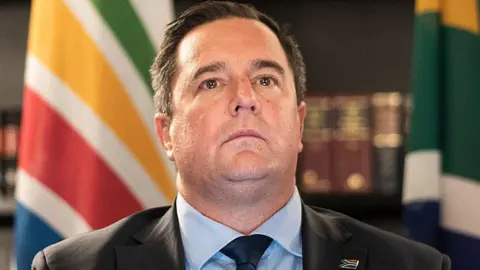
In a surprising announcement, John Steenhuisen, the leader of South Africa's Democratic Alliance (DA), has confirmed he will not be seeking re-election in April. Known for leading the DA since 2019, Steenhuisen's decision is raising alarms regarding the stability of the country's coalition government precariously formed in 2024 with the African National Congress (ANC). The coalition was necessitated by the ANC's loss of parliamentary majority.
Amid a backdrop of controversies that appear to have impacted his leadership candidacy, Steenhuisen, now serving as Minister of Agriculture in President Cyril Ramaphosa's government, had previously been expected to run unopposed. His announcement during a press conference highlighted his commitment to focusing on addressing the foot-and-mouth disease outbreak affecting South Africa's livestock sector—a crisis that has severely impacted farmers and triggered criticisms of his department's response.
Steenhuisen's political career began at age 22 with the Democratic Party, the precursor to the DA, with a rise through the ranks that culminated in his leadership position two decades later. His leadership style faced scrutiny, particularly regarding his handling of the foot-and-mouth outbreak, which continues to threaten food security in the country by decimating livestock industries.
Concerns loom regarding his departure and its potential effects on the fragile coalition with the ANC, as various factions within the DA, including significant fallout with former Environment Affairs Minister Dion George, remain unresolved. The future trajectory of South Africa's political landscape seems to hang in the balance as the DA contemplates its next moves amid internal conflict and external pressures.
Amid a backdrop of controversies that appear to have impacted his leadership candidacy, Steenhuisen, now serving as Minister of Agriculture in President Cyril Ramaphosa's government, had previously been expected to run unopposed. His announcement during a press conference highlighted his commitment to focusing on addressing the foot-and-mouth disease outbreak affecting South Africa's livestock sector—a crisis that has severely impacted farmers and triggered criticisms of his department's response.
Steenhuisen's political career began at age 22 with the Democratic Party, the precursor to the DA, with a rise through the ranks that culminated in his leadership position two decades later. His leadership style faced scrutiny, particularly regarding his handling of the foot-and-mouth outbreak, which continues to threaten food security in the country by decimating livestock industries.
Concerns loom regarding his departure and its potential effects on the fragile coalition with the ANC, as various factions within the DA, including significant fallout with former Environment Affairs Minister Dion George, remain unresolved. The future trajectory of South Africa's political landscape seems to hang in the balance as the DA contemplates its next moves amid internal conflict and external pressures.