In brief
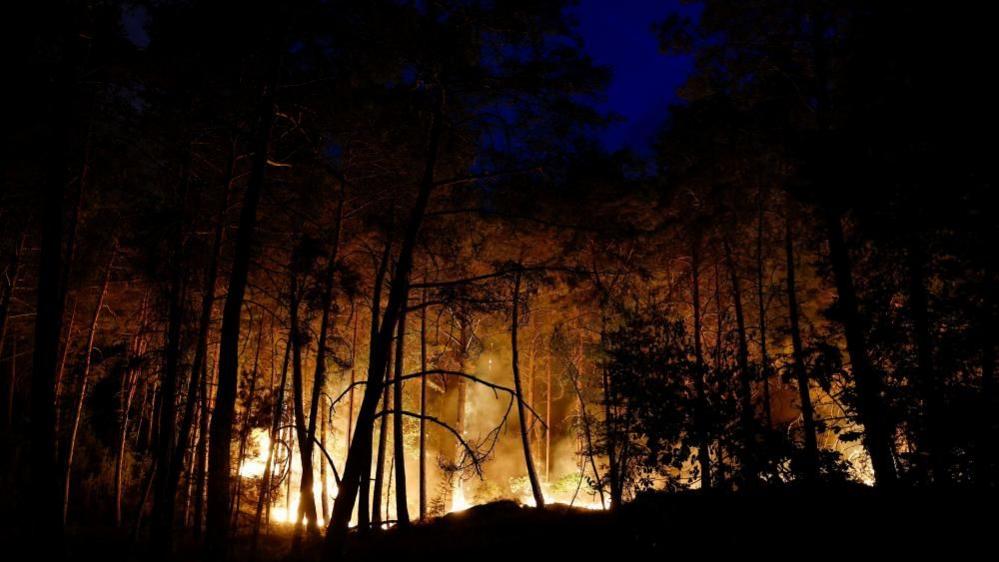
A dense forest fire south of Paris has spread to 800 hectares, forcing traffic off a major north‑south highway and causing six‑hour train delays. Two airlines and a hovercraft have been scrambled from the south of France—his first use of air units in the capitol region—to fight the fire. The blaze, labelled by officials as "virulent" and of "exceptional scale", underscores the growing impact of Europe’s hottest summer and the wider spread of wildfires across Spain, the UK, and other parts of the continent.
Planes sent to tackle wildfires of 'exceptional scale' near Paris
Bird‑sight images from the southern suburbs of Paris show a sprawling blaze covering about 800 hectares in the Fontainebleau forest, a distance of roughly 60 kilometres southeast of the capital. Two firefighting aircraft were dispatched from the traditionally drier, hotter part of France to combat this unusual emergency, marking the first time such resources have crossed the Normandy‑Champagne boundary for a Paris‑area fire.
The fire has partially sealed the A1 motorway—the main north‑south artery linking Paris to the countryside—disrupting road traffic during the peak of the first weekend getaway of the summer. Earlier this week, the blaze blocked an eastward highway and brought delays of up to six hours to trains arriving at or departing from Gare de Lyon, according to SNCF.
Officials explained that the incident is unfolding amid a third heatwave this year, a summer that has seen record temperatures across Europe. The emergency has prompted the temporary shutdown of three nuclear power stations in the Paris region to prevent the discharge of warm cooling water into already overheated rivers.
The Tour de France team had to shorten a stage by 30 kilometres as temperatures approached forty degrees Celsius, a rare adjustment in the race’s history. Meanwhile, reports of wildfires elsewhere—Spain’s Almeria region suffered its most deadly fire on record, and a large blaze in north Wales was declared a major incident by emergency services—highlight the continental scale of the problem.
Chief firefighter Eric Brocardi told reporters that the aim of the aerial operation is to save lives and protect property, while two helicopters and an observation aircraft have also been deployed to assist ground crews. The coordinated response reflects a growing trend of cross‑regional aerial firefighting in France’s most vulnerable zones.
The ongoing crisis illustrates how climate‑induced heatwaves are intensifying fire season across Europe, posing new challenges for infrastructure, public safety, and the environment. Citizens are urged to stay informed about traffic updates and train schedules while authorities work to contain the inferno and mitigate its risks.