In brief
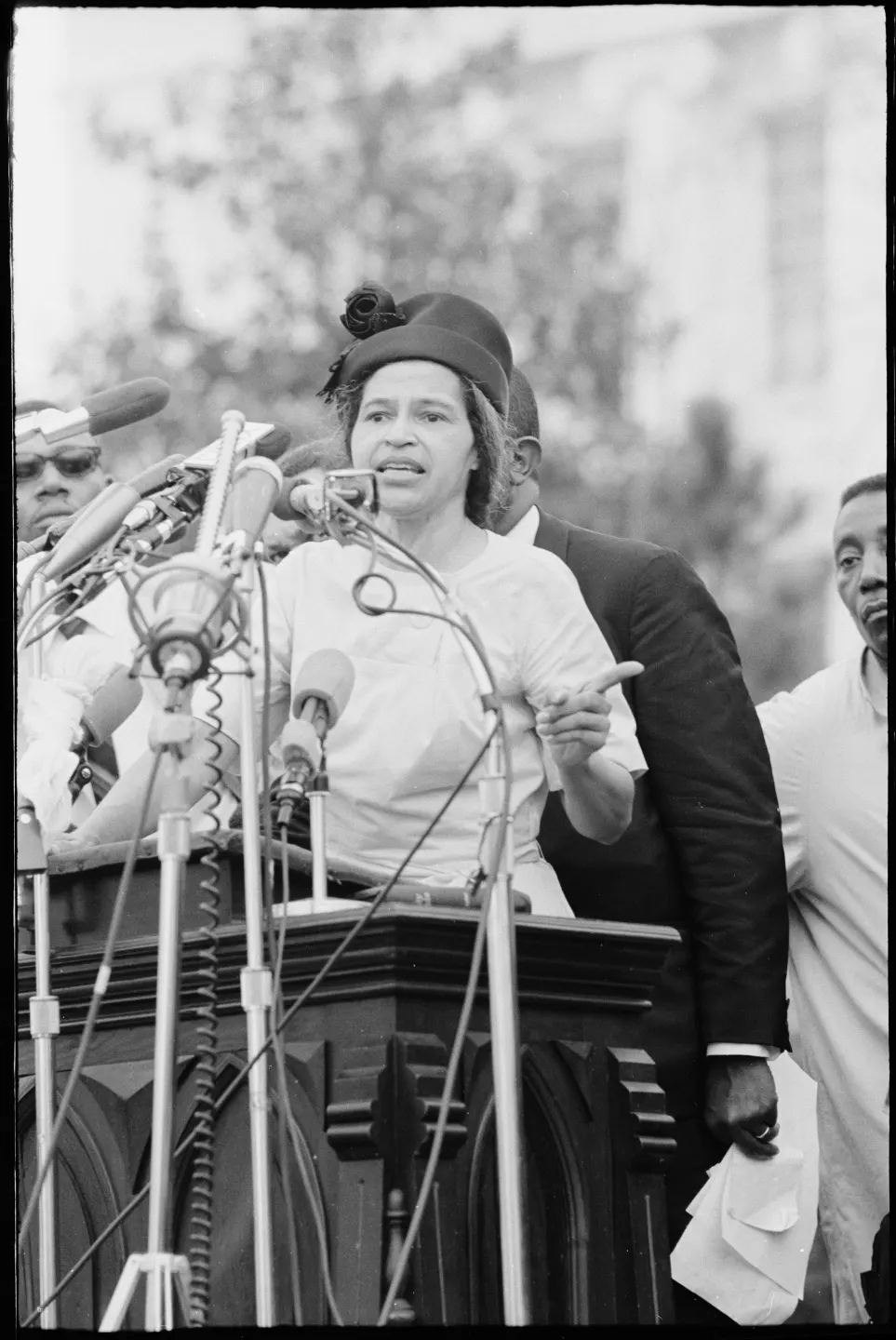
On the 70th anniversary of the Montgomery Bus Boycott, rare photographs of Rosa Parks taken during the 1965 Selma to Montgomery march were made public, revealing dimensions of her activism often overshadowed by her famed act of civil disobedience. The images, captured by photographer Matt Herron, show Parks alongside fellow demonstrators and serve as a poignant reminder of her continuous commitment to civil rights. The unveiling was part of an effort to reconnect archival images with the historical communities they represent.
MONTGOMERY, Ala. – New photographs of the iconic Rosa Parks, unveiled for the first time, highlight her legacy in the Civil Rights Movement beyond the widely known Montgomery Bus Boycott. Taken by renowned Civil Rights photographer Matt Herron during the Selma to Montgomery march in 1965, these images capture Parks amidst other activists, showcasing her enduring role in the fight for voting rights.
The event coincides with the 70th anniversary of the Montgomery Bus Boycott, which began on December 1, 1955, when Parks famously refused to give up her bus seat. While often remembered for this singular act, these newly released photographs underscore the depth of her activism that continued for years afterward.
Donna Beisel, director of the Rosa Parks Museum, emphasized that the release of these images provides a more comprehensive view of Parks as both a human being and an activist. This is showing who Ms. Parks was, both as a person and as an activist, said Beisel, highlighting the importance of recognizing her contributions beyond that pivotal moment.
Among the newly publicized photographs, some depict Parks sitting amongst the crowd, engaged in the march. Unlike many of Herron’s well-publicized works, these particular images were not revealed during his lifetime, perhaps due to their quality or the lesser-known figures present.
Jeannine Herron, the photographer's widow, shared that the photos were recently discovered from a contact sheet at Stanford University. She, along with historians and surviving activists, aims to connect these images with the communities portrayed, ensuring that this history is acknowledged locally.
During a gathering that celebrated these revelations, participants reminisced about their experiences during the march. Doris Wilson, a young woman captured in Herron's photographs, reunited with June Finer, a doctor who treated her injuries during the march, bringing together personal stories and shared histories highlighted by the images.
Cheryl Gardner Davis, who hosted marchers at her family home at the time, observed the impact of the photographs, stating that they validate the sacrifices made by her family and others during this critical time. “It’s, in a sense, validation. This actually happened, and people were there,” remarked Davis, reflecting on how these images breathe life into the narratives often overlooked in historical recountings.