The US Department of Justice (DoJ) recently released its most extensive collection of documents related to Jeffrey Epstein, raising significant public interest and controversy over the appearance of numerous prominent names, including that of Donald Trump.
The release, part of a mandated transparency effort, contains over 11,000 documents, many of which were redacted extensively. Lawmakers have criticized the DoJ for the substantial obscuring of names and details that they argue should be disclosed under the new law, which limits redactions primarily to victim protection and active investigations.
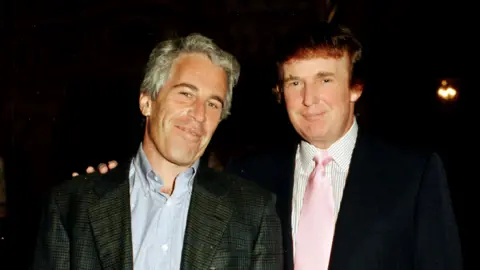
Notably, Trump's name appears more frequently in these files than in previous iterations. Documents cited media reports and even included an email from a prosecutor referring to Trump's flights on Epstein's private jet. However, the DoJ stressed that mere mention in the documents does not imply involvement in wrongdoing.
The files also contained certain alarming communications, such as an email from 2001 by an individual identified as 'A,' asking Epstein's associate Ghislaine Maxwell for 'inappropriate friends,' indicating deeper, troubling connections. Evidence suggests a network of possible Epstein co-conspirators, with ten individuals flagged in internal FBI discussions, further intensifying the scrutiny on those involved.
One of the more sensational findings was a purported letter from Epstein to convicted abuser Larry Nassar, which the DoJ later identified as fake, underscoring the challenges surrounding the handling of such sensitive documents.
As more files are released and investigations proceed, the implications of these revelations regarding Epstein's connections with influential figures continue to unfold, prompting calls for greater transparency from lawmakers wary of expansive redaction.