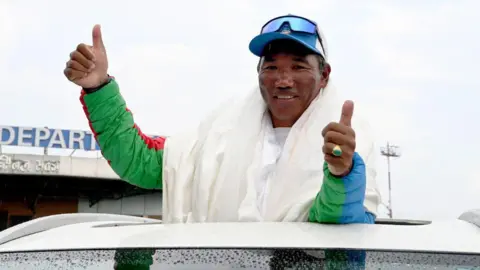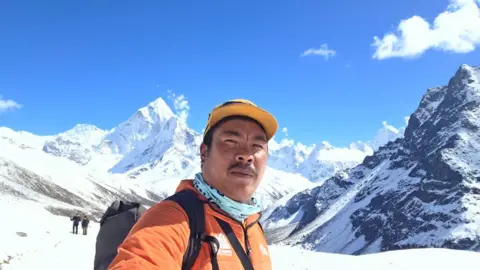
During a routine waste‑collection sweep on Mount Everest’s Khumbu Icefall, a team of cleaners spotted a lone figure in a bright blue summit suit crawling beside the treacherous ice. The man was Hillary Dawa Sherpa, a local guide who had lost contact with his clients six days earlier on a descent from Camp 4.
After two days of no food and limited oxygen, Dawa began chewing ice and discovered melted chocolate in his pocket that sustained him until he managed to climb to the edge of a crevasse. An unexpected avalanche cleared a path that allowed him to escape and be discovered by the cleaning crew, just before rescue teams launched a search three days after he first vanished.
The 57‑year‑old survived despite frostbitten hands, a broken back from a crevasse fall, and the sheer extremity of 7,200 metres (23,600 feet). He was air‑lifted to a Kathmandu hospital, where he is now recovering in an intensive care unit.
Stories of Dawa’s miraculous rescue climbed international headlines, yet they also raised thorny questions about the practices of high‑altitude tour operators. Himalayan Traverse Adventure (HTA), the company that assigned Dawa to the expedition as a cook before re‑assigning him as a guide, is now facing police complaints for alleged negligence, while the Nepalese tourism department is investigating the incident.
HTA claims that weather and logistics prevented an immediate search, and that its role was simply to assist a platform that coordinated permit issuance. Critics argue they may have left a guide behind without proper support, and that the company exploited lower‑priced packages to cover the costs of operating on the world’s tallest peak.
Reports from the expedition’s clients – British climber Chris Thrall and Polish climber Mariusz Chmielewski – recount decisions made during a whiteout that forced them to sacrifice one for the other. Both paid heavily for what they felt was VIP service but received minimal guidance, prompting accusations that HTA’s staff put an experienced guide like Dawa in risky, unintended roles.
The case has reignited a debate about the safety of Sherpas, whose labor is essential to the Everest tourism industry. Investigations continue to examine whether lapses in communication, training and response protocols resulted in the tragic circumstances that left Dawa exposed and nearly dead for six days on the mountain.