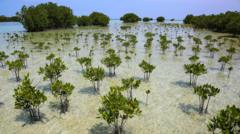
Mangrove forests are healing after decades of human destruction
Mangroves—those salt‑tolerant forests that cling to coastlines—have long been threatened by development, aquaculture and deforestation. A new global analysis of satellite data turns that narrative on its head, showing that the planet’s mangroves have started to grow again.
From the 1980s until 2010, more than 12,000 square kilometres of mangrove habitat were gone, primarily across Asia, Africa and the Americas. That area could be visualised as the size of Jamaica.
The recent study reveals a reversal of that trend over the last decade: the net loss of mangroves since 1980 is now roughly 849 square kilometres—a dramatic decline from the earlier figure. The key driver is the ecosystems’ remarkable capacity to regenerate naturally once human pressure eases.
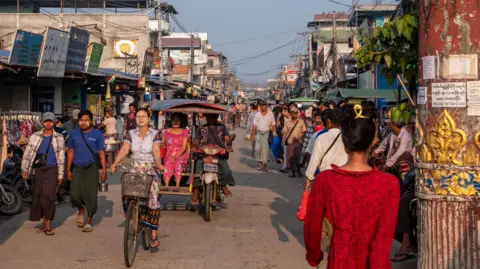
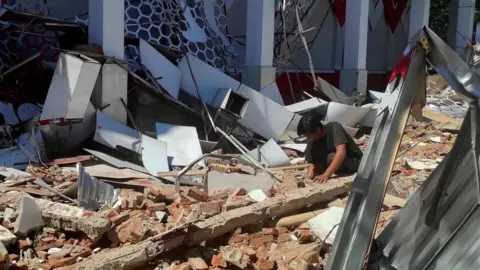
This resurgence is linked to several factors. Stronger legal protection and heightened public understanding of mangroves’ role in shielding coastlines from storm surges—particularly after the 2004 Indian Ocean tsunami—have slowed deforestation. In Indonesia, the tsunami’s impact spurred community support for mangrove conservation; in Myanmar, Cyclone Nargis (2008) and a national logging ban (2016) produced similar behavioural shifts.
The researchers also benefitted from a more detailed satellite imaging system – the Landsat series – which is highly sensitive to canopy changes and provides uniform global coverage. This technology captured far larger numbers of newly grown mangrove trees than previous assessments, giving a clearer picture of natural expansion.
Despite increased growth, the story is not entirely rosy. In West and Central Africa, mangrove losses continue to be severe, with oil pollution in the Niger Delta clogging waterways and cutting down forests. The same phenomenon that nourishes mangroves—nutrient runoff from upstream—also contributes to their degradation downstream.
Nevertheless, there are bright signs. The proportion of closed‑canopy mangroves—the richest, most carbon‑dense form—has risen by almost 20% since the 1980s. Scientists estimate that mangroves store up to five times more carbon dioxide than terrestrial forests, and their tangled roots also slow waves, offering protection against storm surges and tsunamis.
“We are moving in the right direction because you can see a very clear trend of a decreased loss rate,” said Dr Zhen Zhang, lead author from Tulane University. “The forests are becoming healthier, and the net loss has been largely reversed.”
While the pace of mangrove recovery depends on local policies and environmental pressures, the global upward trend provides hope for climate resilience and the countless species that rely on these habitats. The new findings underscore the importance of safeguarding mangroves, not only for biodiversity but also for carbon sequestration and coastal protection.