Lightning Fatality Highlights Risks of Volcanic Hiking
In Sicily, a 30‑year‑old American tourist was killed when a lightning strike pierced a thunderstorm raging on the active Mount Etna on Sunday. The victim was discovered by firefighters in a restricted zone often used to get closer to the summit, in cardiac arrest at around 20:00 local time (18:00 GMT). He was air‑lifted to Cannizzaro Hospital in Catania but the life‑saving efforts ended in death upon arrival.
Mount Etna, Europe's most frequent volcano, has erupted several times in recent weeks. The eruptions have caused ash plumes to cloud eastern Sicily and have disrupted flights at Catania International Airport, even prompting air‑traffic authorities to downgrade a red alert to orange status.
Italian civil protection agencies now restrict access to more areas of the volcano, especially the high‑altitude upper slopes where shelters are scarce. Authorities warn that the combination of volcanic activity and sudden weather changes can create hazardous conditions for trekkers.
Launched by Reuters and echoed by local media, the tragedy underscores growing tourist interest despite ongoing risks. Around 1.5 million people visit Etna each year, drawn by its dramatic landscapes even as it remains an active geological threat.
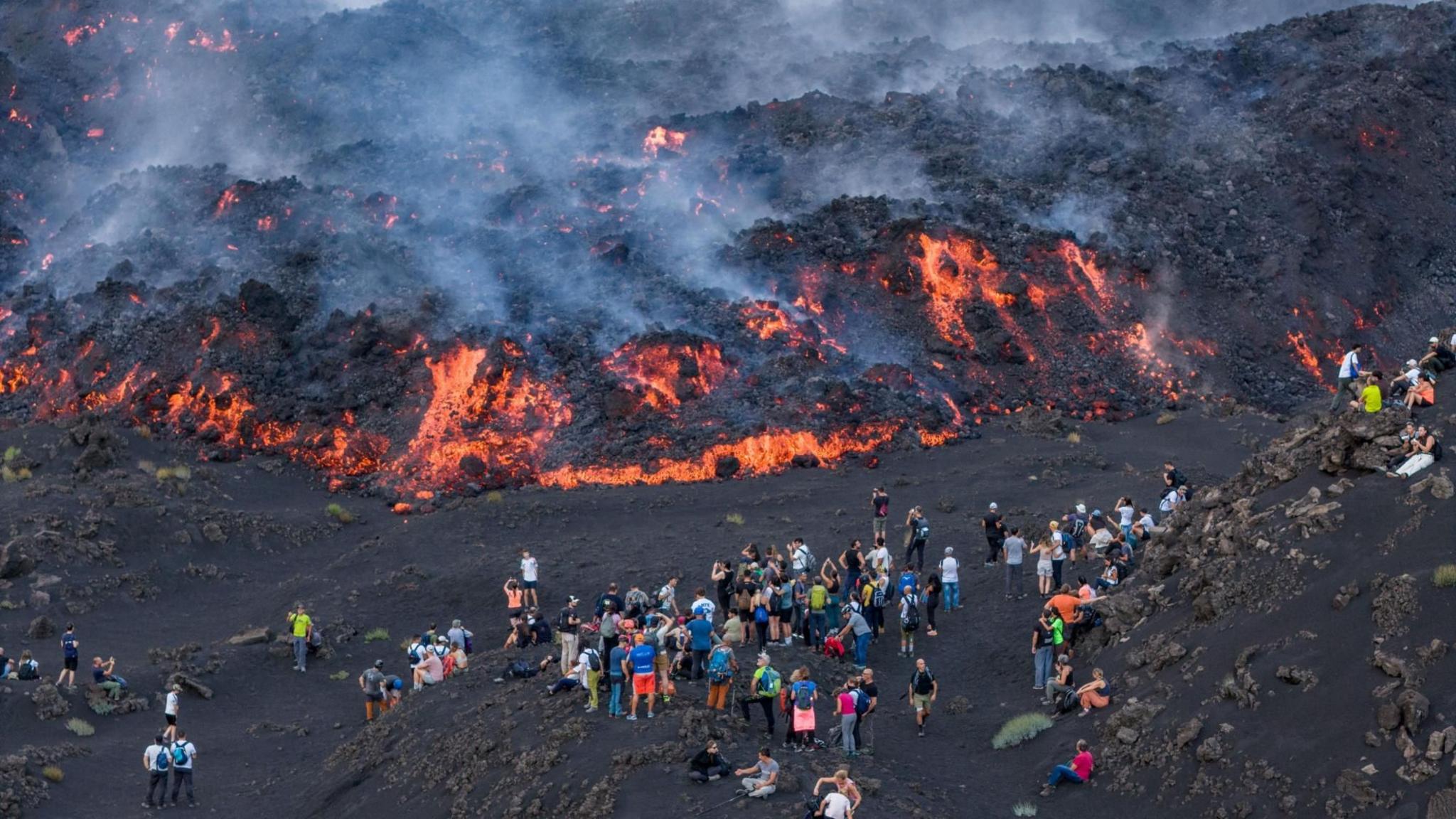
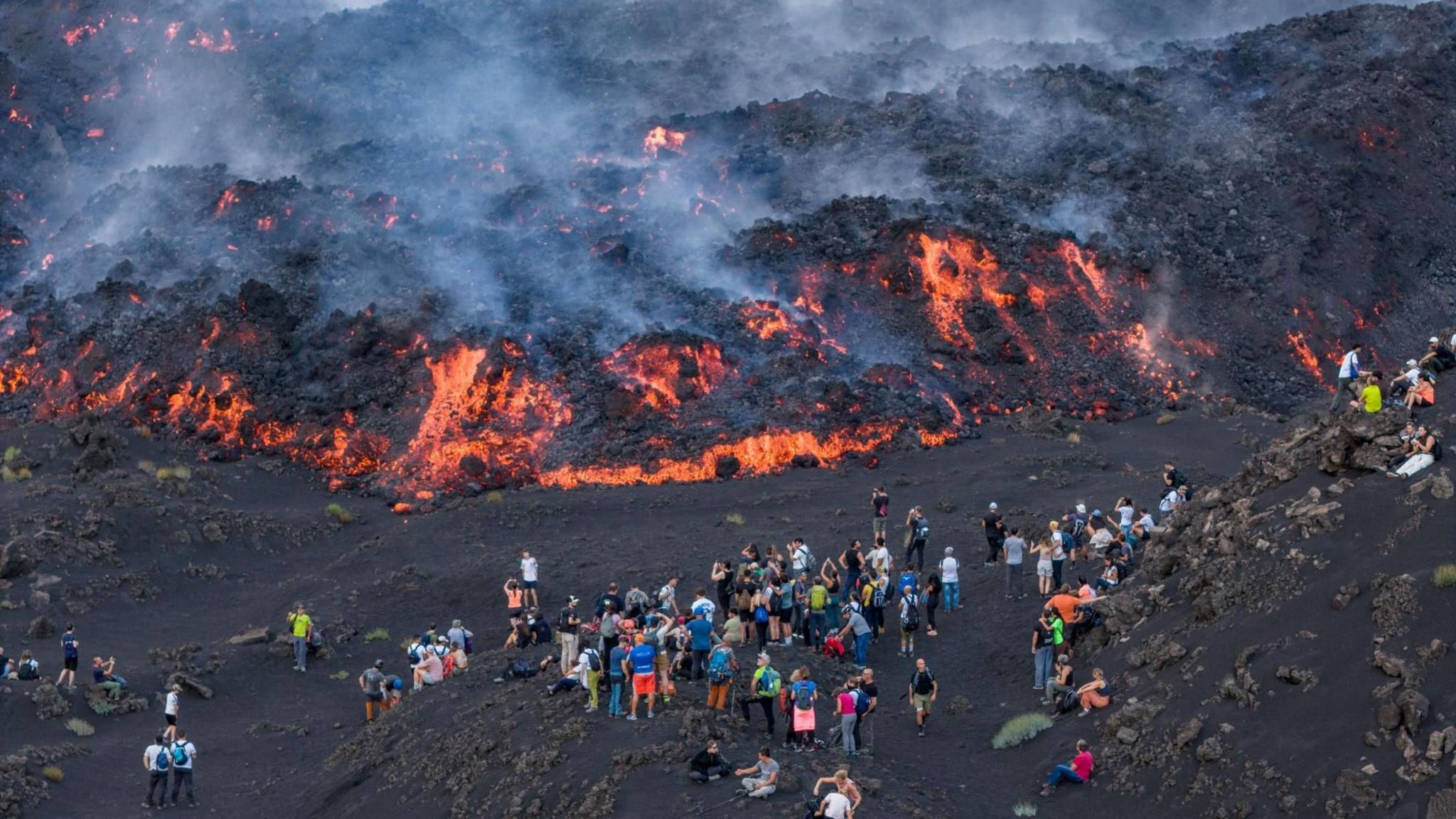
For visual context, the eruption frequently draws crowds, as is shown in the following photo of lava flowing down the volcano’s slopes in August 2026.