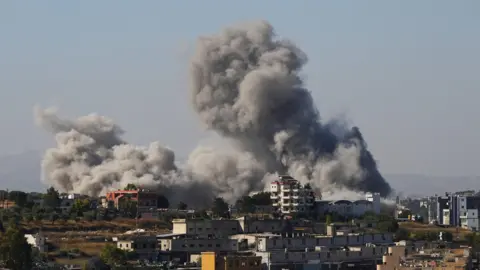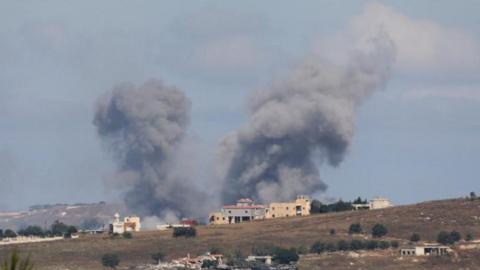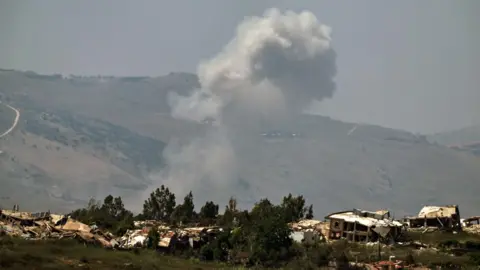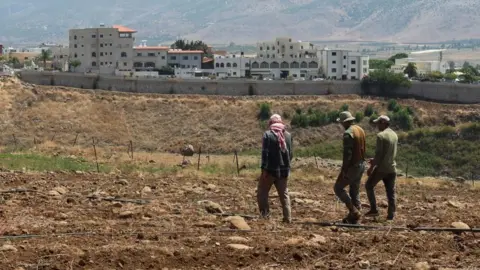
Lebanon has accused Israeli aircraft of spraying an agricultural herbicide over southern villages at concentrations authorities described as dangerously high, raising concerns for food and environmental security.
The agriculture and environment ministries confirmed that laboratory tests indicated the substance was glyphosate, a chemical commonly used to destroy vegetation, with concentrations in some samples between 20 and 30 times the levels usually accepted.
President Joseph Aoun condemned the spraying, referring to it as a violation of Lebanese sovereignty and an environmental and health crime.
The Israel Defense Forces (IDF) stated they had no comment regarding the matter.
The reason behind the release of herbicide remains unclear as residents of various border villages reported the incident, occurring more than a year after a ceasefire ended a war between Israel and Hezbollah.
Earlier in the week, UN peacekeepers in Lebanon mentioned that they had been notified by Israel of planned spraying near the border, prompting them to take shelter and cancel operations. This is not the first incident where Israeli forces have allegedly dropped chemical substances over Lebanese territory.
With tens of thousands still displaced after recent hostilities, harsh challenges persist for their return to these agricultural-dependent areas, complicating livelihoods and rebuilding efforts.
According to Ramzi Kaiss from Human Rights Watch, this incident continues to jeopardize the ability to return to homes, maintain agriculture, and recover after the extensive destruction faced during conflicts.
Environmental experts warn that such actions not only impair local ecosystems but also threaten Lebanon's agricultural sector economically. The UN's Food and Agriculture Organization previously reported more than $700 million in damages and losses to Lebanon's agricultural sector from the 2024 conflict.
Moreover, environmental groups expressed their concern regarding the adverse effects on agricultural production and soil fertility, stressing the risk to biodiversity and food security.
The World Health Organization (WHO) has classified glyphosate as probably carcinogenic to humans based on studies linking it to non-Hodgkin lymphoma, although regulatory authorities, including the US EPA, view it as posing little carcinogenic risk.
The Lebanese foreign ministry has stated its intention to submit a formal complaint against Israel to the UN Security Council.