In brief
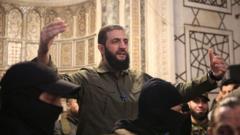
Abu Mohammed al-Jawlani, the leader of Hayat Tahrir al-Sham (HTS), has successfully redefined his role from a jihadist figure to a more politically inclined leader amid the ongoing Syrian civil war. His shift from militant attire to military fatigues, the rebranding of his organization, and the establishment of a governing body reflect a strategic move towards securing local and international legitimacy for his control in Syria.
Amidst the backdrop of Syria's protracted civil conflict, Abu Mohammed al-Jawlani, the head of Hayat Tahrir al-Sham (HTS), has embarked on a significant journey of self-reinvention, shedding his jihadist past and adopting his real name, Ahmed al-Sharaa. This transformation aligns with HTS's efforts to enhance its legitimacy following the anticipated fall of President Bashar al-Assad. Al-Jawlani's move from the militant image of the past to a more traditional military commander reflects a broader strategy to present HTS as a viable political force in the region.Born in Saudi Arabia in 1982, Al-Jawlani's path to jihadism began in Iraq, where he linked with al-Qaeda through its earlier iterations. After his imprisonment, he was dispatched by Abu Bakr al-Baghdadi to Syria to establish al-Nusra Front—an entity that later distanced itself from its ties to al-Qaeda to gain broader acceptance. This strategic pivot proved crucial as tensions with IS led to the need for autonomy and local support.Over the years, Al-Jawlani adopted a pragmatic approach to governance, marked by the establishment of the "Syrian Salvation Government," the organization set up to manage civilian affairs in Idlib. His efforts aimed to mitigate fears surrounding HTS's radical roots and demonstrate effective governance, especially following crises like the devastating earthquakes in 2023. However, despite these strides, criticism persists regarding authoritarian practices, mirroring the very regime HTS initially opposed.As HTS consolidates power and capitalizes on recent military successes, Al-Jawlani's leadership style enunciates a 'moderate jihad' approach that fuses jihadist principles with a focus on political stability. While navigating between hardliners and the international community, HTS’s evolution underlines the complexities of formulating a cohesive identity aligned with both its foundational beliefs and the goals of Syrian citizens yearning for freedom.In light of ongoing challenges—including protests from within and scrutiny from global actors—Al-Jawlani's capacity to pivot successfully indicates a potential shift in jihadism, potentially favoring localized, pragmatic movements over traditional, inflexible organizations like IS and al-Qaeda. This trajectory could herald a new chapter in the Syrian civil war, as HTS and its leadership strive to establish a semblance of governance amid a tumultuous landscape.