In brief
Using advanced techniques, researchers have uncovered the first view of this scroll's text, igniting hopes for broader revelations about lost philosophical works.
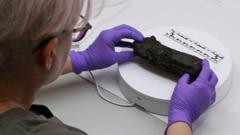
Recent technological advancements have transformed our understanding of ancient texts, notably with a badly burned scroll from Herculaneum, a town catastrophic by the eruption of Mount Vesuvius in 79 AD. This scroll, once thought to be irretrievably lost, has now been digitally "unwrapped" through sophisticated X-ray imaging and artificial intelligence, offering a glimpse of its contents for the first time in nearly two millennia.This scroll, now appearing as an unrecognizable mass of carbon, is incredibly delicate and cannot be unrolled manually without disintegration. The initiative, spearheaded by Stephen Parsons of the Vesuvius Challenge, aims to extract and decipher text from these fragile artifacts without causing further damage. As the scanning process continues, researchers are optimistic they can fully read the scroll, which is believed to contain philosophical ideas, possibly linked to Greek Epicurean philosophy—the same subject as another scroll deciphered last year.Hundreds of such carbonized scrolls were buried alongside Herculaneum’s ruins, and prior attempts to physically open them had resulted in disintegration. The investigation of these texts is conducted at Oxford's Diamond Light Source, utilizing a synchrotron for high-intensity X-ray imaging capable of dissecting the structure of the scroll with precision at the millimeter level. The process creates a detailed 3D model of the scroll, allowing layers to be analyzed.While the papyrus and ink are chemically similar, artificial intelligence is employed to identify and digitally visualize the ink signatures—illuminating the once-hidden words. The results so far have uncovered numerous lines of text, hinting that much more remains concealed within the scroll's depths.As investigations proceed, team members have expressed the significance of connecting with those from centuries past who produced these scrolls. Nicole Gilroy from Oxford's Bodleian Library emphasizes the human connection fostered through this work, breathing life into the ancient philosophers who once put their thoughts to parchment and laid them aside for future generations. Researchers are calling for the cooperation of further computing resources and analytical talent, hoping to unveil more wisdom hidden in these ancient relics. As AI and imaging technology continue to progress, the chance to access long-lost knowledge from our history beckons tantalizingly close.