In brief
As Somaliland looks towards a changing U.S. administration, there is a growing anticipation among many of its residents for recognition as a sovereign state. Simultaneously, Somalia's officials warn of destabilization and conflict, highlighting the geopolitical complexities that could arise should this recognition materialize.
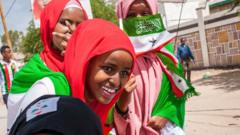
The anticipation is electrifying in Somaliland, particularly among the youth, where many harbor hopes that Donald Trump's presidency will bring U.S. recognition of their self-declared republic. After breaking away from Somalia 33 years ago, Somaliland has operated largely as an independent state, despite its shaky ties to its eastern neighbor. "Donald is our savior. He is a wise and practical man," expressed Aisha Ismail, a university student in Hargeisa, as she embraced the idea of formal recognition with uncontainable enthusiasm.Conversely, perspectives from Mogadishu tell a starkly different story. Abdi Mohamud, a data analyst, dismisses Somaliland's aspirations, stating, "I doubt Donald Trump knows what Somaliland is, never mind where it is." His frustration mirrors the sentiments from the official Somali government, as they seek to maintain the nation’s territorial integrity amid talks of U.S. diplomatic shifts.The U.S. political landscape, particularly among influential Republicans, is showing increasing support for Somaliland's autonomy. Congressman Scott Perry has even proposed legislation for formal recognition, hinting at U.S. re-engagement in a region it has historically viewed with caution—all following the chaos in Mogadishu during the 1990s, known as the "Black Hawk Down" incident.Heightened U.S. interest stems not only from Somaliland's stable governance and adherence to democratic principles but also from its strategic location near vital shipping lanes. U.S. objectives may be further driven by the geopolitical tussle for influence against China, which has vested interests across the Horn of Africa.However, the prospect of recognizing Somaliland poses significant risks. Somali officials, including Foreign Affairs Minister Ali Omar Balcad, argue that such a move could trigger separatist movements around the globe and destabilize the already fragile Horn of Africa. Past U.S. military engagements in Somalia further complicate this delicate balance; the potential withdrawal of American troops looms as a threat to both Somali and broader regional stability.Rumors recently surfaced regarding a deal between Somaliland and Ethiopia that would exchange sea access for recognition, drawing ire from Mogadishu. The environment remains charged, with anxiety permeating through the Somali public.As U.S. policymakers deliberate on their next steps regarding Somalia and Somaliland, the sentiment is palpable: recognition of Somaliland could serve as a tactical move for the United States, promising benefits such as economic, military, and strategic payoffs. "The case for Somaliland in U.S. terms is very compelling," noted Joshua Meservey, who recently transitioned from the Heritage Foundation to the Hudson Institute.Ultimately, while Somalilandians like Aisha Ismail revel in the possibility of U.S. recognition, the route remains fraught with challenges. Political analysts predict significant shifts in U.S. policy under Trump—a potential disruptor navigating a politically complex landscape—as both Somaliland and Somalia brace for implications that could reverberate throughout the Horn of Africa.