In brief
A Munich court has handed life imprisonment to an Iraqi man named Twana H.S. and a nine‑year term to his wife Asia R. A. for enslaving two Yazidi girls in Mosul between 2015 and 2017. They were also found guilty of membership in the Islamic State and of genocide, war crimes and sexual abuse. The case illustrates Germany’s use of universal jurisdiction to prosecute crimes committed abroad. The defendants, former asylum seekers, joined IS in 2015 after radicalisation in Munich and fled back to Iraq to carry out the slavery and abuse. Their conviction marks a significant legal step against Islamic State atrocities.
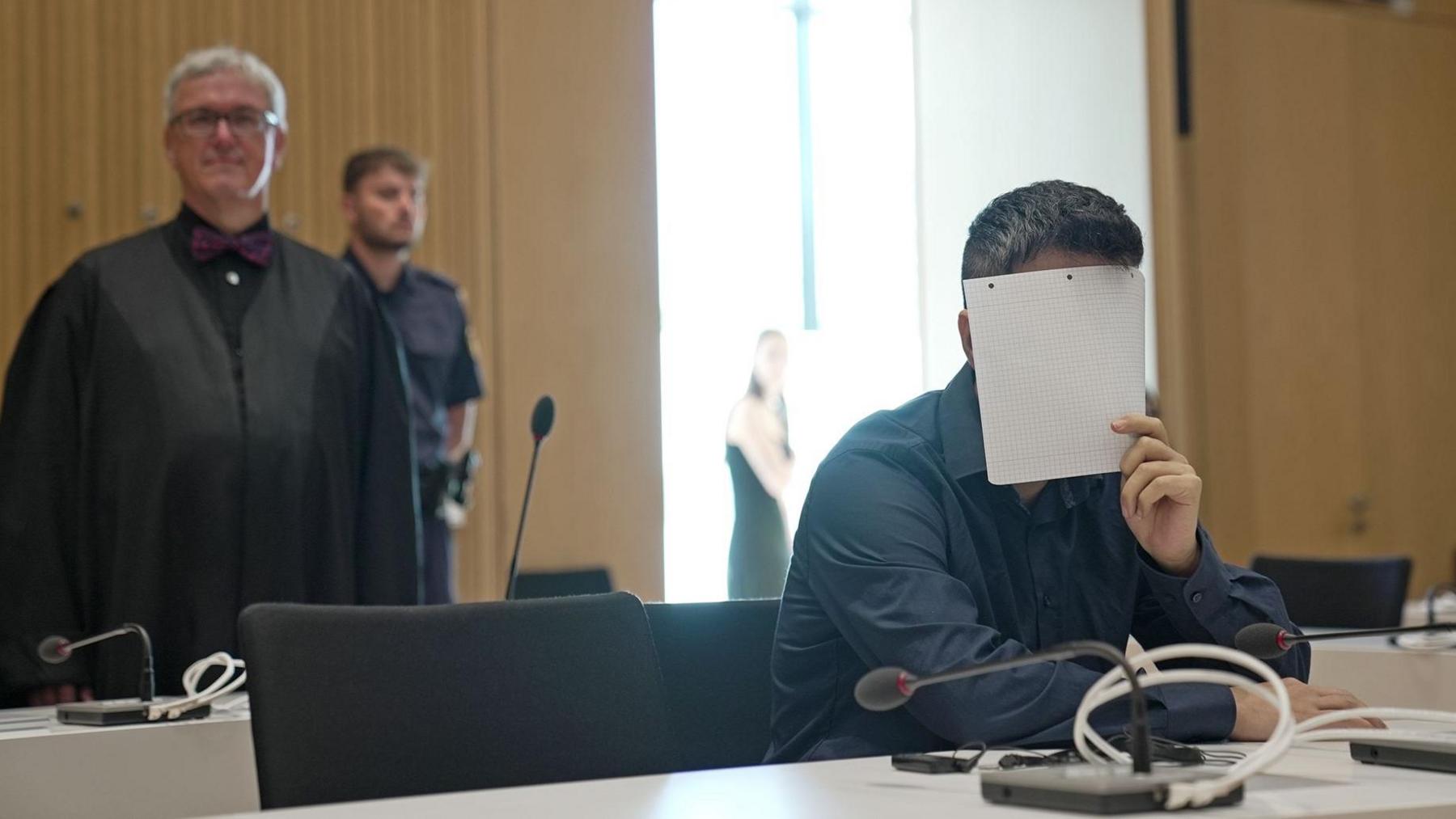
Munich court judgment: T. H.S. has been sentenced to life imprisonment and A. R. A. to nine and a half years. The convictions stem from the enslavement of two Kurdish‑speaking Yazidi girls in Mosul, the abduction and repeated sexual assault of the children, and participation in ISIS criminal activity.
Background: The husband arrived in Germany in the early 2000s as an asylum seeker, later denied asylum but allowed to stay as the parent of a German child. Radically influenced at a Munich mosque, he returned to Iraq in 2015, where he married A. R. A. under Islamic law and joined the Islamic State until 2017.
Details of the crime: In autumn 2015 the couple purchased a five‑year‑old Yazidi girl from a bazaar in Mosul. In October 2017 a twelve‑year‑old girl was also acquired. Prosecutors presented evidence that the men were repeatedly raped both children; the wife applied makeup, arranged sleeping quarters, and prevented the girls from practising their religion. Forced labour, household chores, beatings with blunt instruments, and at least one instance of scalding were also documented. The older girl was recovered and gave testimony during the June 2026 trial; the younger girl remains missing.
Legal framework: Germany’s universal jurisdiction rule permits prosecution of genocide and war crimes committed abroad. This principle was invoked to bring the case to the Munich Higher Regional Court, where charges of genocide, war crimes, crimes against humanity, and severe sexual abuse were laid. The court declared that the defendants’ actions were part of ISIS’s systematic campaign to destroy the Yazidi religion.
Public reaction: The verdict has been welcomed by Yazidi survivors and human rights organisations demanding accountability for ISIS atrocities, while highlighting the challenges of prosecuting transnational crimes.