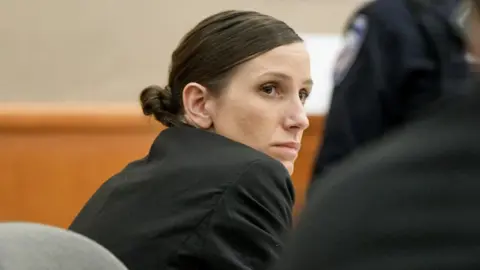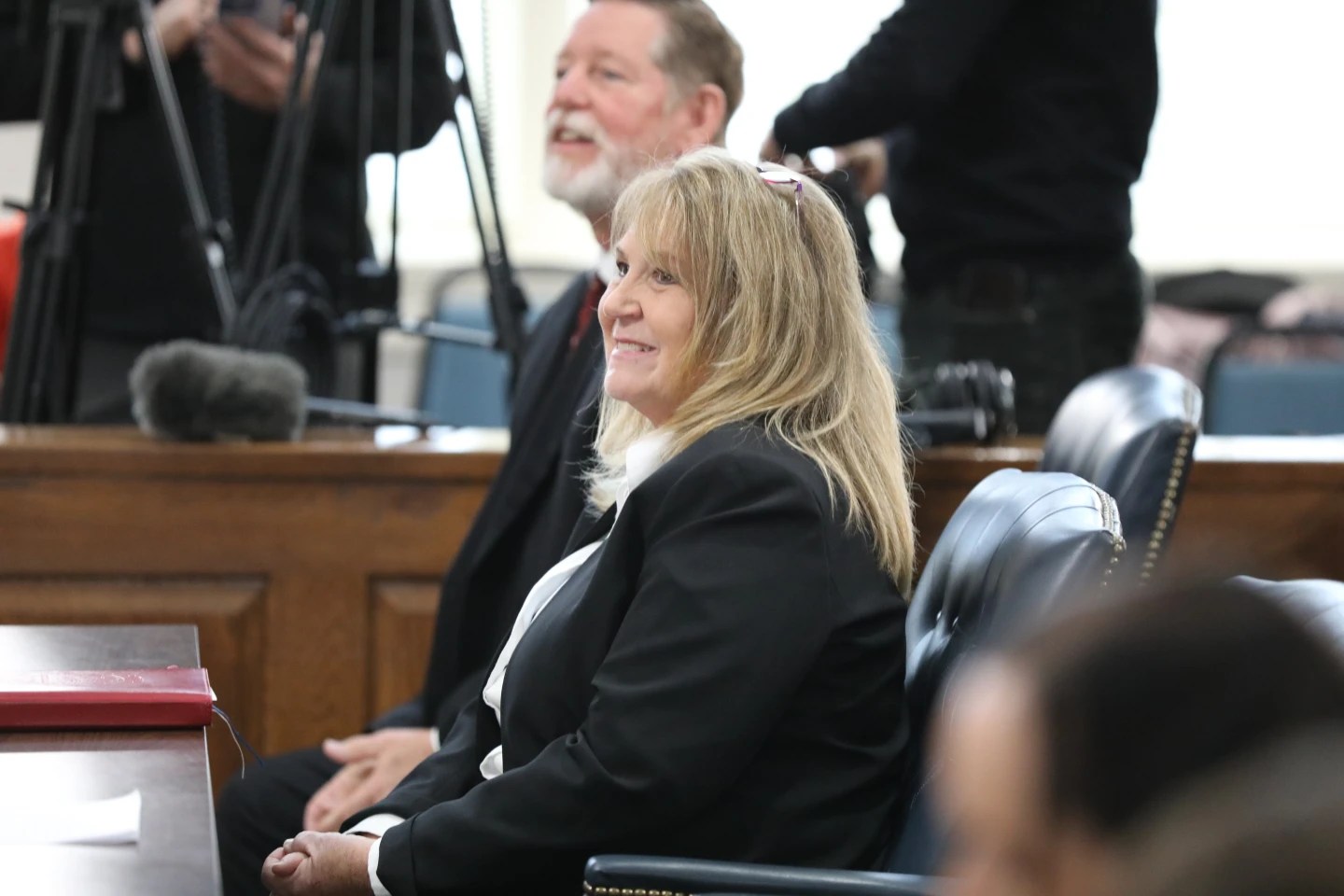
ST. MATTHEWS, S.C. (AP) — Mary Rebecca 'Becky' Hill, the former court clerk associated with the scandalous Alex Murdaugh murder trial, has pleaded guilty to multiple charges on Monday. Hill admitted to showing sealed court exhibits to a photographer, which she later lied about in court, leading to her being charged with obstruction of justice and perjury.
In Colleton County Circuit Court, Hill accepted four charges, including misconduct in office for improperly taking bonuses and using her position to promote a book she wrote about the Murdaugh case. The presiding Judge Heath Taylor sentenced Hill to one year of probation, indicating that her punishment would have been more severe if misconduct related to jury tampering was established.
Expressing remorse, Hill stated, 'There is no excuse for the mistakes I made. I’m ashamed of them,' during her hearing.
As the Clerk of Court, Hill was responsible for overseeing jury responsibilities and handling exhibits during Murdaugh's highly publicized six-week trial, which concluded with his conviction for the murders of his wife and son. This trial revealed layers of power, danger, and privilege buried within the legal system of a South Carolina county where the Murdaugh family had longstanding influence.
Alarming details revealed in the court proceedings indicated that Hill had shown graphic images related to the crime to various media personnel, undermining the integrity of the judicial process. The attorney for Murdaugh alleged that Hill tried to influence jurors through her actions, adding to the serious implications surrounding her role during the trial.
In addition to these charges, Hill faced numerous ethics violations, including promoting her book using public office resources and improperly handling county funds intended for child support initiatives.
Hill, who previously resigned during the scrutiny following Murdaugh's trial, indicated she wanted to focus on family. The repercussions of her actions in a high-profile trial continue to evolve as Murdaugh appeals his convictions, suggesting that the full extent of how these controversies could influence the state's legal landscape is still unfolding.
In Colleton County Circuit Court, Hill accepted four charges, including misconduct in office for improperly taking bonuses and using her position to promote a book she wrote about the Murdaugh case. The presiding Judge Heath Taylor sentenced Hill to one year of probation, indicating that her punishment would have been more severe if misconduct related to jury tampering was established.
Expressing remorse, Hill stated, 'There is no excuse for the mistakes I made. I’m ashamed of them,' during her hearing.
As the Clerk of Court, Hill was responsible for overseeing jury responsibilities and handling exhibits during Murdaugh's highly publicized six-week trial, which concluded with his conviction for the murders of his wife and son. This trial revealed layers of power, danger, and privilege buried within the legal system of a South Carolina county where the Murdaugh family had longstanding influence.
Alarming details revealed in the court proceedings indicated that Hill had shown graphic images related to the crime to various media personnel, undermining the integrity of the judicial process. The attorney for Murdaugh alleged that Hill tried to influence jurors through her actions, adding to the serious implications surrounding her role during the trial.
In addition to these charges, Hill faced numerous ethics violations, including promoting her book using public office resources and improperly handling county funds intended for child support initiatives.
Hill, who previously resigned during the scrutiny following Murdaugh's trial, indicated she wanted to focus on family. The repercussions of her actions in a high-profile trial continue to evolve as Murdaugh appeals his convictions, suggesting that the full extent of how these controversies could influence the state's legal landscape is still unfolding.