Two British campaigners are among five people denied US visas after the State Department accused them of seeking to 'coerce' American tech platforms into suppressing free speech.
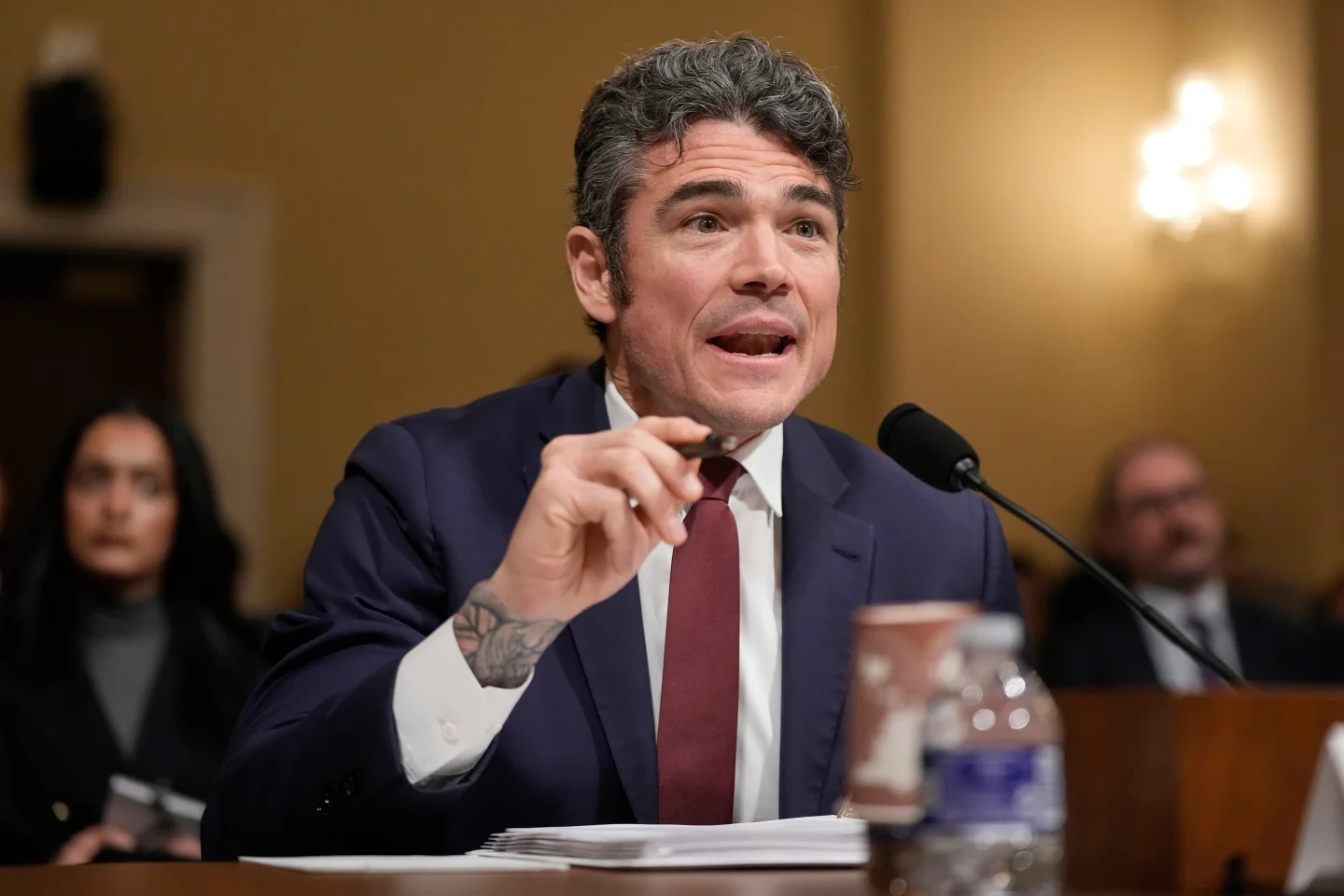
Imran Ahmed, an ex-Labour adviser who now heads the Centre for Countering Digital Hate (CCDH), and Clare Melford, CEO of the Global Disinformation Index (GDI), were labelled 'radical activists' by the Trump administration and banned from entering the US.
A French ex-EU commissioner and two senior figures at a Germany-based anti-online hate group were also denied visas.
European leaders have condemned the measures, while the UK government said it is 'fully committed' to upholding free speech.
'While every country has the right to set its own visa rules, we support the laws and institutions which are working to keep the internet free from the most harmful content,' a UK government spokesperson said.
French President Emmanuel Macron described the travel ban as 'intimidation and coercion aimed at undermining European digital sovereignty' while the EU's foreign policy chief Kaja Kallas said it was 'unacceptable and an attempt to challenge our sovereignty'.
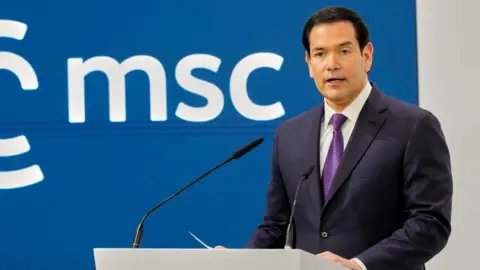
The US billed the measures as a response to people and organisations that have campaigned for restrictions on American tech firms, with Secretary of State Marco Rubio stating they belonged to a 'global censorship-industrial complex'.
'President Trump has been clear that his America First foreign policy rejects violations of American sovereignty. Extraterritorial overreach by foreign censors targeting American speech is no exception.'
Ahmed from the CCDH, which advocates for government action against hate speech and disinformation online, has links to senior Labour figures. The US government labelled him a 'collaborator' for the CCDH's past work with the Biden administration.
Melford founded the GDI, a non-profit that monitors the spread of disinformation, in 2018. US Undersecretary of State Sarah B Rogers accused the GDI of using taxpayer money 'to exhort censorship and blacklisting of American speech and press'.
A GDI spokesperson told the BBC that 'the visa sanctions announced today are an authoritarian attack on free speech and an egregious act of government censorship'.
Also targeted was Thierry Breton, the former top tech regulator at the European Commission, who suggested that a 'witch hunt' was taking place. Breton was described by the State Department as the 'mastermind' of the EU's Digital Services Act (DSA), which imposes content moderation on social media firms, angering US conservatives who see it as seeking to censor right-wing opinions.
Breton has clashed with Elon Musk, the world's richest man and owner of X, over obligations to follow EU rules, and the European Commission recently fined X for violations under the DSA.
Reacting to the visa ban, Breton posted on X: 'To our American friends: Censorship isn't where you think it is.'
In addition to Ahmed and Melford, Anna-Lena von Hodenberg and Josephine Ballon of HateAid, a German organization, were also targeted by the visa bans. They condemned the action as 'an act of repression by a government that is increasingly disregarding the rule of law and trying to silence its critics by any means necessary'.
Despite the controversy, the UK's commitment to free speech remains firm amid escalating tensions between U.S. and European digital policies.