An astonishing underwater cemetery stretching roughly 1,200 km (745 miles) was unearthed in the southeastern Indian Ocean, within the Diamantina fracture zone—a ridge‑and‑trench feature on the sea floor.
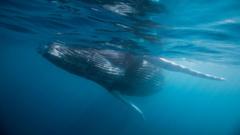
The 7 km‑deep site contains an astonishing collection of whale fossils that span a 5.3 million‑year window. Among the bones are a skull of the extinct beaked whale Pterocetus benguelae and the largest carcass discovered—a 5‑metre Antarctic minke whale.
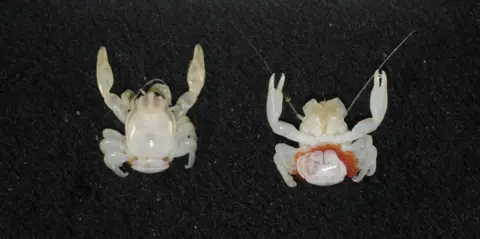
During 32 dives, researchers from China, Italy and New Zealand catalogued 485 sites and active colonisation fields, revealing a diverse community of organisms—jellyfish, worms and crustaceans—that thrive on the spread of carcasses.
“Discovering a necropolis of this scale was completely unexpected,” said Xiaotong Peng of the Chinese Academy of Sciences.
The team also identified a wholly new species, Pterocetus diamantinae, named after the trench where it was found. Further insights were published in Nature, underscoring the significance of this discovery for paleontology and marine biology.