In brief
The U.S. Food and Drug Administration has signalled a landmark shift in pancreatic‑cancer care by approving daraxonrasib, sold as Rasonque. The drug, targeting the ubiquitous KRAS mutation, was shown in a 500‑patient phase‑3 trial to cut the median survival gap from 6.6 months on standard chemotherapy to 13.2 months. Less severe side effects also tipped the scale in its favour. With pancreatic cancer having an 80‑plus percent mortality rate, the therapy offers a critical new option. Oncologists now spotlight the pill as a key tool in hard‑to‑treat cancers.
FDA approves breakthrough pancreatic‑cancer drug that nearly doubles survival
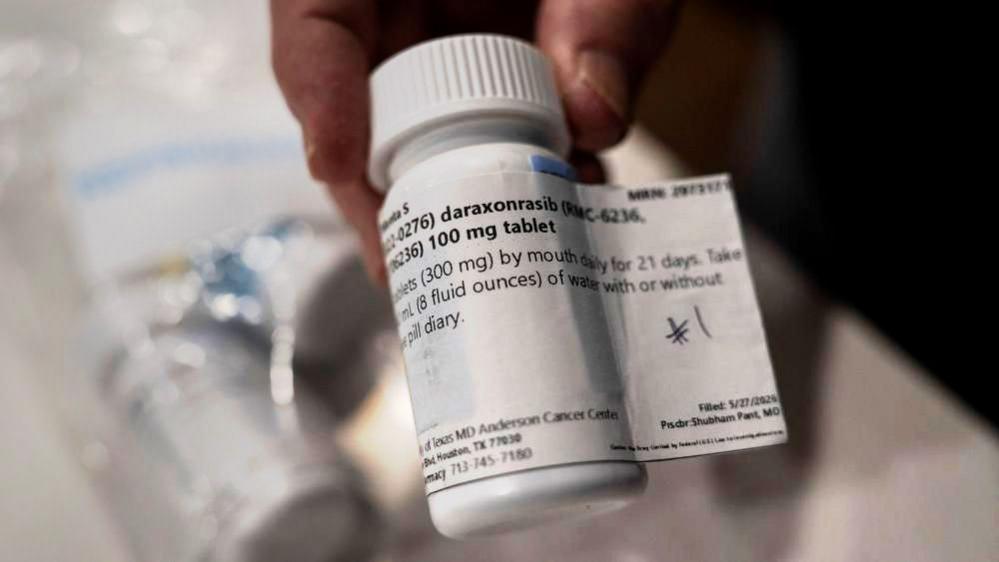
In a decisive move, the U.S. Food and Drug Administration granted approval to daraxonrasib, marketed as Rasonque by Revolution Medicines, after a phase‑3 study showed an almost two‑fold increase in median survival for patients with advanced pancreatic cancer.
The 500‑patient trial compared the daily oral pill against standard chemotherapy. Those treated with daraxonrasib lived on average 13.2 months, whereas the control group survived only 6.6 months. The drug targets the KRAS gene mutation that drives the growth of more than 90% of pancreatic tumours, effectively shutting it down.
Side‑effect data paint a more favorable picture: rash, diarrhoea, nausea, fatigue and vomiting were the most common, and 44% of patients experienced severe reactions compared with 57.5% on chemotherapy. The FDA called the outcome a “critical new option” for patients facing a historically hard‑to‑treat disease.
With roughly 67,000 new diagnoses each year and a leading mortality rate among major cancers, the approval comes as a promising advance. Former U.S. Senator Ben Sasse, diagnosed with stage 4 disease, is a participant in the trial and reported tumour shrinkage.
Early next‑step studies will explore combination strategies, while the Breakthrough Therapy designation granted earlier this year underscored the urgent need for faster approval pathways.