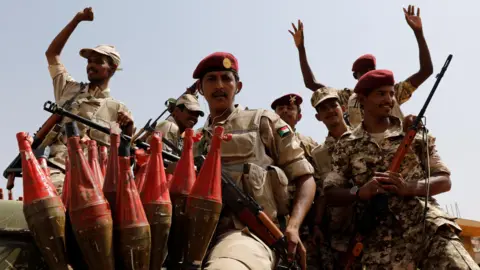
A network of Colombian mercenaries backed by the United Arab Emirates (UAE) provided critical support to Sudan's paramilitary Rapid Support Forces (RSF), enabling it to capture the western city of el-Fasher last year, according to a new report. The investigation, conducted by security analysis organization the Conflict Insights Group (CIG), utilized data obtained from tracking the mobile phones of the Colombian fighters, showing a direct link between the UAE and the RSF. The UAE has long denied supporting the RSF, which has been engaged in a brutal conflict against Sudan's regular army for three years.
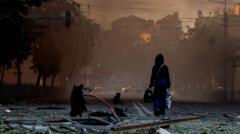
El-Fasher's fall has marked one of the most brutal chapters in the Sudanese conflict, contributing to a humanitarian crisis deemed by many to be the worst worldwide, with tens of thousands dead and millions displaced. Justin Lynch, director of CIG, noted that their research is the first to conclusively prove UAE involvement in support of the RSF. The report highlights drone operations facilitated by these mercenaries as essential to the RSF's military strategy.
Tracking data showed mercenaries involved with drones traveling from a UAE base to Sudan before the RSF's takeover of el-Fasher, with indications that they named their wi-fi networks after their units, further linking them to operations from UAE soil. The evidence includes tracking of devices that connected to service networks in areas controlled by RSF.
Colombian President Gustavo Petro described the mercenaries as “spectres of death” and labeled their recruitment a form of human trafficking. The report outlines the scale of atrocities during the RSF siege, invoking calls for accountability from the international community.
The US Treasury Department has accused Colombian nationals and affiliated companies of recruiting fighters for the RSF but has not yet established a direct connection to the UAE. The growing evidence suggests that these foreign influences have been pivotal to the ongoing violence, complicating the prospects for peace in Sudan.
El-Fasher's fall has marked one of the most brutal chapters in the Sudanese conflict, contributing to a humanitarian crisis deemed by many to be the worst worldwide, with tens of thousands dead and millions displaced. Justin Lynch, director of CIG, noted that their research is the first to conclusively prove UAE involvement in support of the RSF. The report highlights drone operations facilitated by these mercenaries as essential to the RSF's military strategy.
Tracking data showed mercenaries involved with drones traveling from a UAE base to Sudan before the RSF's takeover of el-Fasher, with indications that they named their wi-fi networks after their units, further linking them to operations from UAE soil. The evidence includes tracking of devices that connected to service networks in areas controlled by RSF.
Colombian President Gustavo Petro described the mercenaries as “spectres of death” and labeled their recruitment a form of human trafficking. The report outlines the scale of atrocities during the RSF siege, invoking calls for accountability from the international community.
The US Treasury Department has accused Colombian nationals and affiliated companies of recruiting fighters for the RSF but has not yet established a direct connection to the UAE. The growing evidence suggests that these foreign influences have been pivotal to the ongoing violence, complicating the prospects for peace in Sudan.