Eiffel Tower faces investigation after women asked to leave for Hindu monks
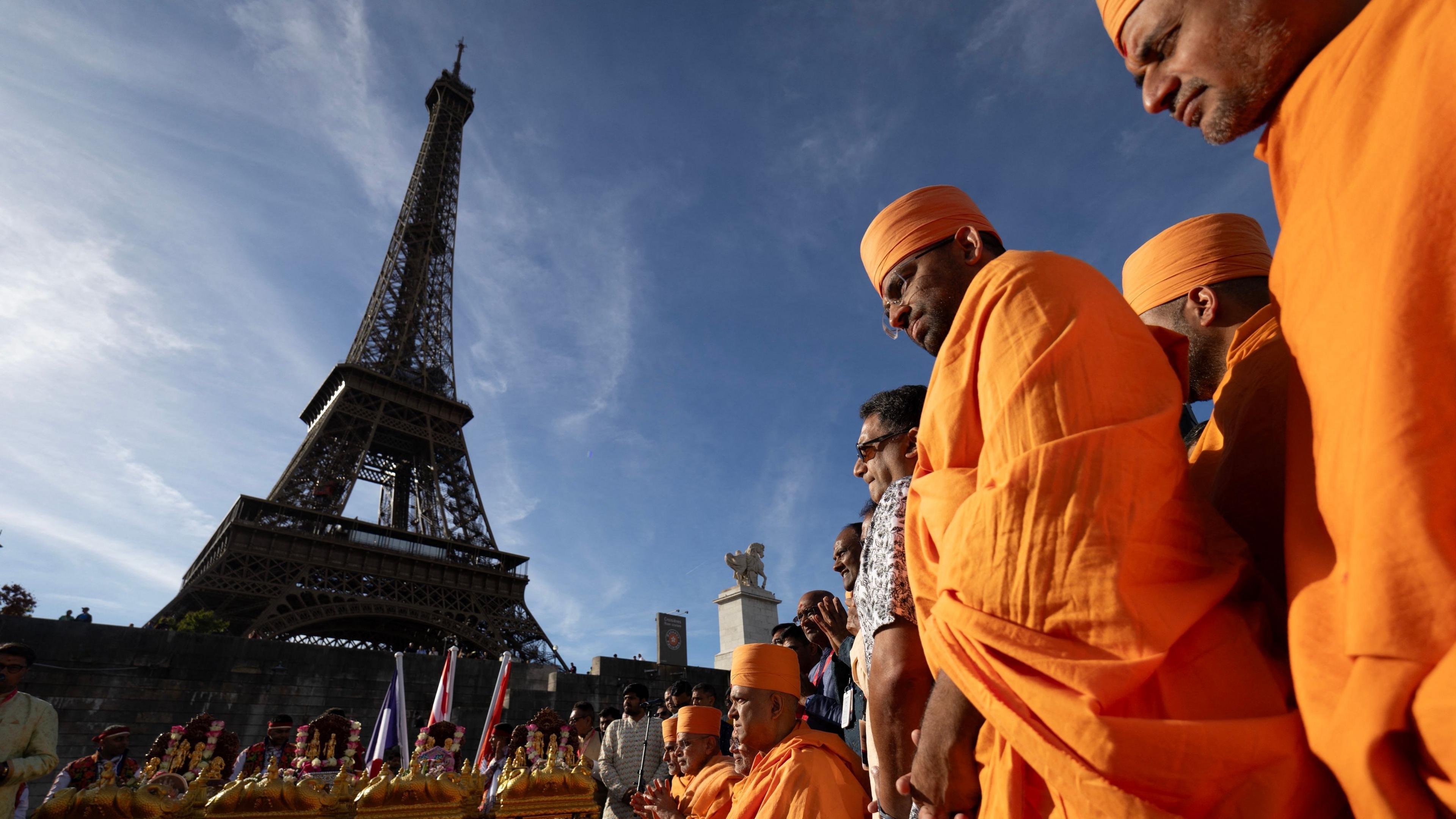
For the first time in its history, the iconic Paris landmark quizzed its staff over a religious request. A delegation of around 100 BAPS Hindu monks and supporters arrived Saturday and asked that women working inside the tower be escorted away from the monument during their visit.
Staff reaction – Federation of Eiffel Tower workers said that women were forced to leave their cubicles and barred from several sections of the monument. Union spokesperson Diane Davoine called the order “humiliating” and the resulting strike the culmination of a “long‑standing crisis” over gender discrimination.
The tower was shut for Monday to give staff time to organize their response. Management said that the surprise request came from the BAPS group, who maintain a strict segregation of men and women in their religious practice and architecture.
Company response – Eiffel Tower president Ariel Weil admitted that his team had been “too eager” to comply with the visitors and said the incident would be investigated internally. “The conditions we imposed are not in line with our values or the principles of gender equality,” he added via Franceinfo.
Weil also stresses that investigations will determine who set the policies that led to the discrimination and promises “that it will never happen again.”
In a statement via AFP, employees reported that under the delegation’s request, women were instructed to avoid certain areas of the tower, a decision that was unprecedented in its scope.
Following the incident, the French National Assembly’s president Yaël Braun‑Pivet and hard‑right leader Marine Le Pen condemned the event. Opposition also articulated that no culture can dictate a woman’s rightful place within a public space.
BAPS, meanwhile, highlighted that the visit was scheduled to coincide with “normal opening hours” and apologized for any disturbance, stressing the faith’s campaign for societal betterment. It noted that while the group maintains gender segregation for its own members “for the benefit of women,” critics accuse the practice of being anachronistic in contemporary Europe.
Human rights advocates say the incident serves as a reminder that international religious encounters in public sites must respect Indigenous French laws on gender equality.