In brief
When a hiker at the Trift Glacier in Lucerne uncovered two bodies on July 26, it turned out to be the missing Belgian mountaineers lost near Weissmies in 1992. DNA confirmation revealed they were 39‑ and 41‑year‑olds who had disappeared over three decades earlier. The find is a stark reminder of how accelerating glacier retreat, monitored by Glamos and Copernicus, is exposing remnants of past tragedies. Similar discoveries in 2023 and the shrinking of Switzerland’s ice reserves are affecting ski resorts and raising questions about future alpine sports.
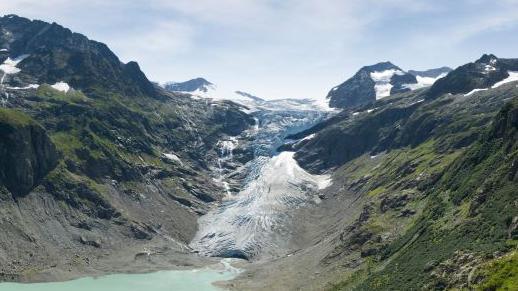
On Sunday, July 26, a solitary hiker’s routine traversal of the Trift Glacier in the Swiss Alps yielded a shocking discovery: two human remains frozen beneath the glacier’s surface. Swiss police confirmed that the bodies belong to Belgian climbers Daniel R. and Yves S., who disappeared on the slopes of Weissmies in 1992.
The victims were 39 and 41 at the time they vanished, according to forensic analysis. DNA testing, conducted by the Swiss Federal Police, matched the remains to the missing mountaineers collected in the Valais region’s database, which tracks alpine disappearances since 1925. Police transported the bodies to a hospital in Sion for formal identification.
The Trift Glacier’s sudden exposure of the bodies is part of a broader pattern of rapid glacier recession. Glaciologists from the European Commission’s Copernicus project report that global glacier loss accelerated after 2000, with Switzerland losing a noted 25‑per‑cent of its ice between 2010 and 2025. Glamos, Switzerland’s glacier monitoring body, recorded a further 3 % shrinkage in 2025 alone, a figure that tracks disquietingly with record melt seasons in 2022 and 2023.
This retreat has already compromised ski resorts, with the Swiss National Ski Organization projecting a 20 % decline in snow cover for peaks above 2,000 m by the next decade. The losses also threaten water supplies and the ecological integrity of the alpine regions, prompting government agencies to accelerate research into climate mitigation strategies.
Glacier melt has previously uncovered the remains of a German climber in 2023 near the Matterhorn and various other fatalities spanning the past century. These discoveries underscore how climate change is rewriting the memory of the mountains—both for the living and the dead.