In brief
The Syrian rebel leader Ahmed al-Sharaa faces backlash after requesting a young woman to cover her hair for a photo, prompting contrasting views on potential governance in a post-Assad Syria.
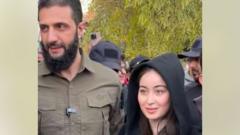
Syria's rebel leader, Ahmed al-Sharaa, has brushed aside the recent uproar concerning his interaction with a young woman during a photo opportunity in Damascus. Videos showing him gesturing for the woman to cover her hair led to widespread criticism from both liberal and conservative commentators, raising questions about the trajectory of governance in Syria following the overthrow of Bashar al-Assad.Sharaa, leader of the Sunni Islamist group Hayat Tahrir al-Sham (HTS), expressed in a BBC interview that he did not coerce the woman, Lea Kheirallah, into covering her hair. "It’s my personal freedom. I want photos taken for me the way that suits me," he stated, addressing the media's concerns. Kheirallah supported his account, remarking that Sharaa’s request was made in a gentle manner and that a leader has the prerogative to present himself as he wishes.The incident reflects the complex landscape any future leadership in Syria will face, trying to reconcile the nation's religious diversity. While Sunni Muslims constitute the majority, Christians, Alawites, Druze, and Ismailis also contribute to the country's demographic tapestry. Amidst these divisions, differing aspirations exist among various political organizations, with some advocating for an Islamic governance model and others favoring secular democracy.HTS, which was once affiliated with al-Qaeda, had imposed stringent social codes following its control of Idlib province in 2017 but has since relaxed these rules due to public dissent. The teachings of the Quran prescribe modesty for both men and women, though interpretations vary widely. The photo incident, which took place during Sharaa's visit to the Mezzeh area of Damascus on December 10, sparked intense social media discourse. Critics feared it represented a shift towards stricter Islamic regulations, akin to mandating hijabs for women. Observers on platforms like France 24 questioned whether Syria’s political landscape was moving towards an Islamic rule.Opponents of Sharaa's decision to be photographed with Kheirallah pointed to the implications of such an interaction between unrelated men and women under conservative Islamic principles. Conversely, voices from within HTS and other hardline groups denounced him for appearing with a woman they considered immodestly dressed.The backlash from these groups cited religious impropriety and emphasized grievances over ongoing issues, such as the lack of resolution on prisoner releases in HTS-controlled areas. This incident, thus, serves as a lens into the challenging balance future leadership must strike within Syria’s fractious political reality.