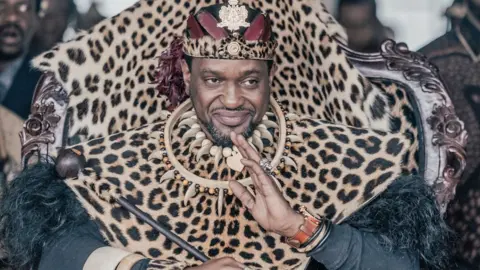
South Africa's Zulu king has raised eyebrows by using a highly derogatory term for foreigners and saying they must all leave the country during a much-hyped speech that was supposed to have been aimed at calming anti-migrant feelings in his home province of KwaZulu-Natal.
Warning: This story contains language some people may find offensive
Misuzulu kaZwelithini was addressing his supporters at the place where 20,000 Zulus warriors defeated a British contingent of 1,800 soldiers 147 years ago beneath the rocky outcrop of Isandlwana hill.
The ire of many of King Misuzulu's subjects is now directed not at British invaders but at migrants from neighbouring countries like Lesotho, Mozambique, and Zimbabwe who have come to South Africa to work. According to official statistics, the country is home to about 2.4 million migrants, about 4% of the population.
The 51-year-old monarch did not advocate violence but said all kwerekwere, an offensive word for African migrants, must pack their bags - even if they were in relationships with South Africans and had children with them.
Many online have been quick to point out the irony of his remarks, considering the king's own mother was from Eswatini and one of his wives is also from the neighbouring kingdom.
But such xenophobic attitudes have long been an issue in South Africa, leading to deadly outbreaks of violence - and his comments echo those made by his late father Goodwill Zwelithini, who urged migrants in 2015 to pack their belongings.
His comments, deemed hurtful and harmful by the country's human rights body, serve as reminders of ongoing xenophobia in South Africa, where economic fears about job losses and resource allocation often target foreigners as scapegoats.
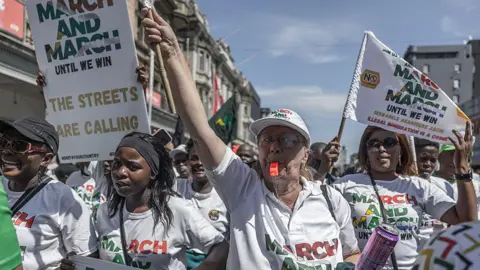
The king's remarks have implications that extend beyond mere sentiment; they reflect a concerning trend in the country's political discourse amidst rising vigilance and protests from groups demanding the removal of foreign nationals.
As tensions escalate and protests emerge over the demographic composition of schools in KwaZulu-Natal, the king's comments may serve to further inflame already existing divisions within the community.