In brief
On Tuesday a Singapore‑flagged container ship, the GFS Pride, was struck by an undisclosed projectile in the Strait of Hormuz and subsequently sank. All 21 crew were evacuated safely and no injuries were reported. A second Singapore ship, the GFS Giselle, suffered hull damage but reached a safe anchorage. Iran’s Revolutionary Guards blamed a naval mine, while maritime authorities in Pakistan and the UK confirmed the sinking’s location. This incident comes as the Strait, a vital conduit for global oil traffic, has seen a surge in attacks amid the ongoing Iran‑US conflict. Shipping companies and governments warn of escalating risks and are tightening protection measures for vessels transiting the region.
Singapore‑flagged GFS Pride went down in the Strait of Hormuz after a projectile struck her hull on Tuesday. The Maritime and Port Authority of Singapore confirmed that all 21 crew members were safely evacuated and that no injuries were reported, although a fire erupted on the vessel following the impact.
A second Singapore‑flagged vessel, GFS Giselle, also sustained damage from an unknown projectile on Wednesday. Fortunately, the ship reached a safe anchorage with its 22‑person crew unharmed.
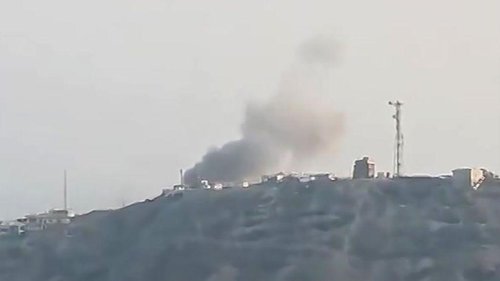
Iran’s Revolutionary Guards released photos purportedly showing black smoke rising from the GFS Pride and a plume of containers floating in the water. They stated that the ship struck a naval mine in what they called an “unauthorised” route within the Strait. The Hydrographer of Pakistan later confirmed that the vessel had sunk approximately 4 nautical miles north‑west of Ras al‑Sheikh Masud in Oman’s Musandam Peninsula.
The United Kingdom Maritime Trade Operations reported that two unnamed container ships had been struck by projectiles in the Strait between 16:40 and 17:00 GMT, both sustaining only minor damage and continuing on their courses.
In all, merchant vessels have faced repeated attacks in the Strait of Hormuz since the start of the Iran‑US war in February. The United Nations’ International Maritime Organization records 106 confirmed incidents with 24 seafarers killed. The Malta‑flagged Safeen Prestige was the only other vessel to sink during this period. Maritime risk‑management firm Vanguard reported that bulk carrier Cape Dao was reported to be sinking after a projectile hit its bridge during a Transit through the Strait on 23 September, resulting in one fatality.
The Strait, which handles about a fifth of global oil and gas shipments, was effectively closed at the conflict’s onset due to Iranian missiles and drones and a U.S. naval blockade. A preliminary U.S.–Iran agreement in June temporarily reopened the waterway, but subsequent attacks and the reinstated blockade caused it to close again.
U.S. military escorts now accompany tankers to keep energy exports flowing, and recent data from shipping‑analytics firm Kpler shows crude exports through the Strait rising to roughly 80 % of pre‑war levels, despite the spike in attacks.

Alternative Shipping Routes

The map shows the divergent northern and southern shipping lanes that have emerged amid regional tensions.
The latest sinking underscores the persistent danger maritime traffic faces in the Strait of Hormuz. Governments and shipping operators continue to adapt routes and increase defensive measures, but the region’s volatility remains a critical concern for global supply chains and international maritime law.