PROVIDENCE, R.I. (AP) — When a gunman began firing inside an academic building on the Brown University campus, students didn’t wait for official alerts warning of trouble. They got information almost instantly, in bits and bursts — through phones vibrating in pockets, messages from strangers, rumors that felt urgent because they might keep someone alive.
On Dec. 13, as the attack at the Ivy League institution played out during finals week, students took to Sidechat, an anonymous, campus-specific message board used widely at U.S. colleges, for fast-flowing information in real-time.
An Associated Press analysis of nearly 8,000 posts from the 36 hours after the shooting shows how social media has become central to how students navigate campus emergencies.
Fifteen minutes before the university’s first alert of an active shooter, students were already documenting the chaos. Their posts — raw, fragmented and sometimes panicked — formed a digital time capsule of how a college campus experienced a mass shooting.
As students sheltered in place, they posted while hiding under library tables, crouching in classrooms and hallways. Some comments came from wounded students, like one posting a selfie from a hospital bed with the simple caption: #finalsweek.
Others asked urgent questions: Was there a lockdown? Where was the shooter? Was it safe to move?
It would be days before authorities identified the suspect and found him dead in New Hampshire of a self-inflicted gunshot wound, later linking him to the killing of a Massachusetts Institute of Technology professor.
Described by Harvard Magazine as “the College’s stream of collective consciousness,” Sidechat allows anyone with a verified university email to post to a campus feed. On most days, the Brown feed is filled with complaints about dining hall food, jokes about professors and stress about exams — fleeting posts running the gamut of student life.
On the Saturday afternoon just before the shooting, a student posted about how they wished they could “play Minecraft for 60 hours straight.” Then, the posts abruptly shifted.
Crowds began pouring out of Brown’s Barus and Holley building, and someone posted at 4:06 p.m.: “Why are people running away from B&H?”
Others quickly followed. “EVERYONE TAKE COVER,” one wrote. “STAY AWAY FROM THAYER STREET NEAR MACMILLAN 2 PEOPLE JUST GOT SHOT IM BEING DEAD SERIOUS,” another user wrote at 4:10 p.m.
Students reacted to every sound — footsteps in hallways, distant sirens, helicopters overhead. When alerts came, the vibrations and ringtones were jarring. Some feared that names of the dead would be released — and that they would recognize someone they knew.
Many American students expressed emotions hovering between numbness and heartbreak.
“Just got a text from a friend I haven’t spoken to in nearly three years,” one student wrote. “Our last messages? Me checking in on her after the shooting at Michigan State.” Multiple students replied, saying they’d had similar experiences.
International students posted about parents unable to sleep on the other side of the world.
“I just want a hug from my mom,” one student wrote.
As the hours dragged on, students struggled with basic needs. Some described urinating in trash cans or empty laundry detergent bottles because they were too afraid to leave their rooms. Others spoke of drinking to cope.
“I was on the street when it happened & suddenly I felt so scared,” one student wrote. “I ran and didn’t calm down for a while. I feel numb, tired, & about to throw up.”
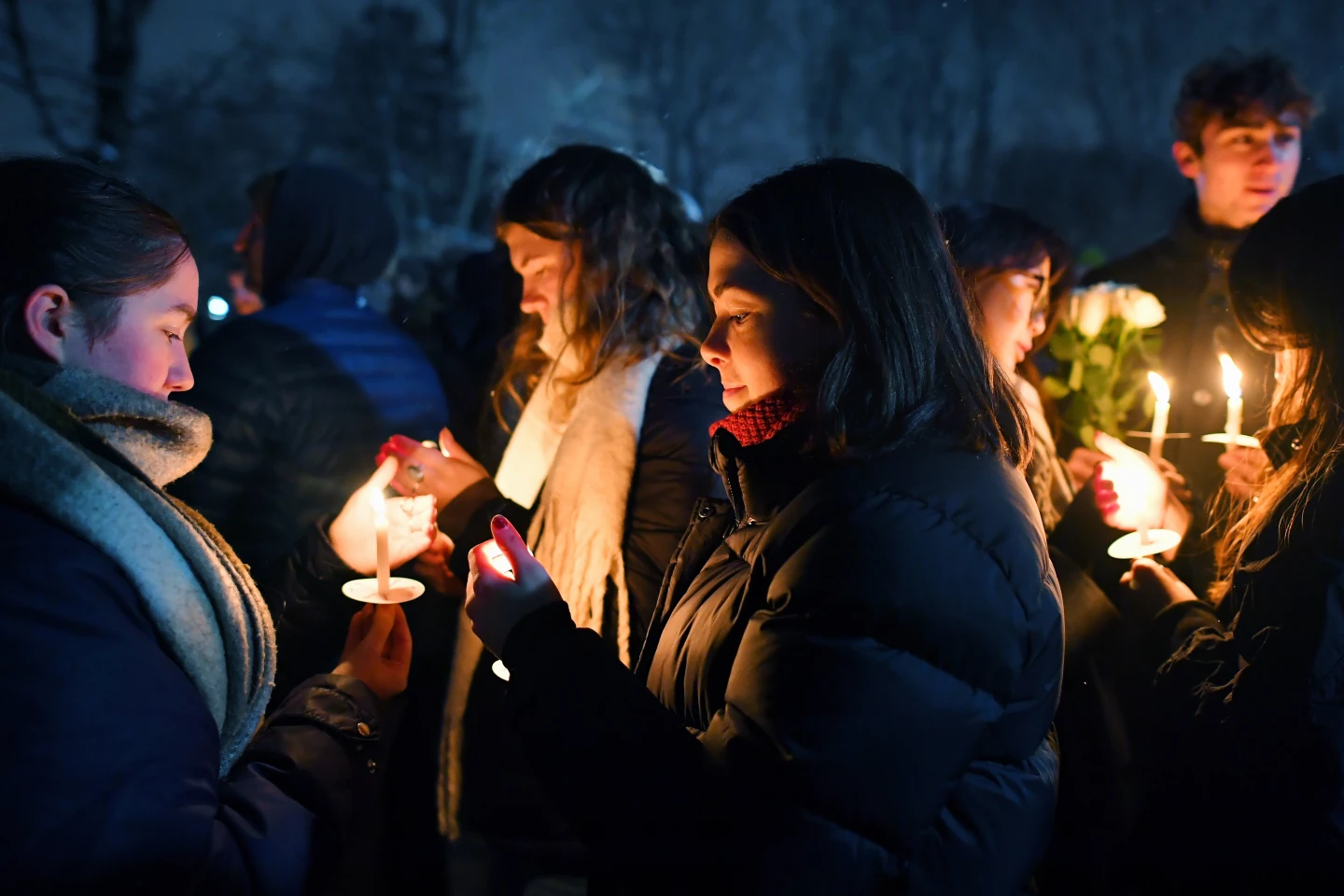
As the lockdown ended, students returned to their dorms as Sidechat continued to fill with grief and reflection. Many said Brown no longer felt the same.
“Snow will always be bloody for me,” one person posted.