Australia's Gun Control Legacy Under Scrutiny After Bondi Beach Shooting
 Getty Images
The recent attack at Bondi Beach that left 15 dead has forced Australia to confront the effectiveness of its renowned gun control laws, initially put into place after the tragic Port Arthur massacre in 1996.
Despite a strong public health approach to gun ownership, a new report revealed the number of privately-owned guns has nearly doubled in the last two decades, spurring anxiety among advocates for stricter regulations. Roland Browne, a leading voice in Australia's gun control movement, expressed frustration over the political system's delayed responses to public safety concerns until tragedy strikes.
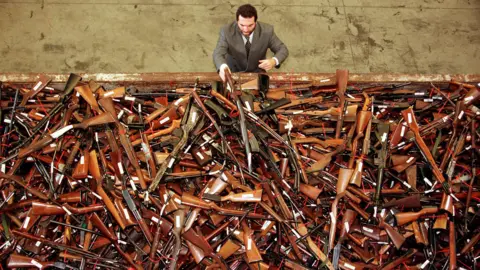
Following the Bondi shooting, political leaders have pledged quick action with proposed reforms focusing on tightening gun ownership regulations, including a national buyback scheme to remove firearms from circulation.
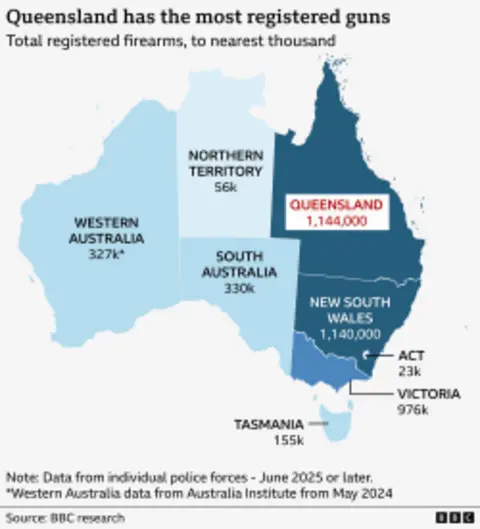
Gun ownership is not exclusive to rural occupants; research indicates a significant presence of firearms in metropolitan areas as well, challenging the stereotype of gun possession in Australia. Browne called for an overhaul of licensing processes to prevent extreme individuals from acquiring weapons.
The crucial discussion about recreational hunting permits also arose, as Browne and the Sporting Shooters Association of Australia voiced contrasting perspectives on their necessity and definitions.
The urgency to revisit and potentially reform Australia’s gun laws comes at a time when mass shootings, though rare, reiterate the impression that safety is compromised by outdated regulations and varying interpretations across different states. The recent events serve as a poignant reminder that community safety must remain paramount in the evolution of Australian firearm legislation.