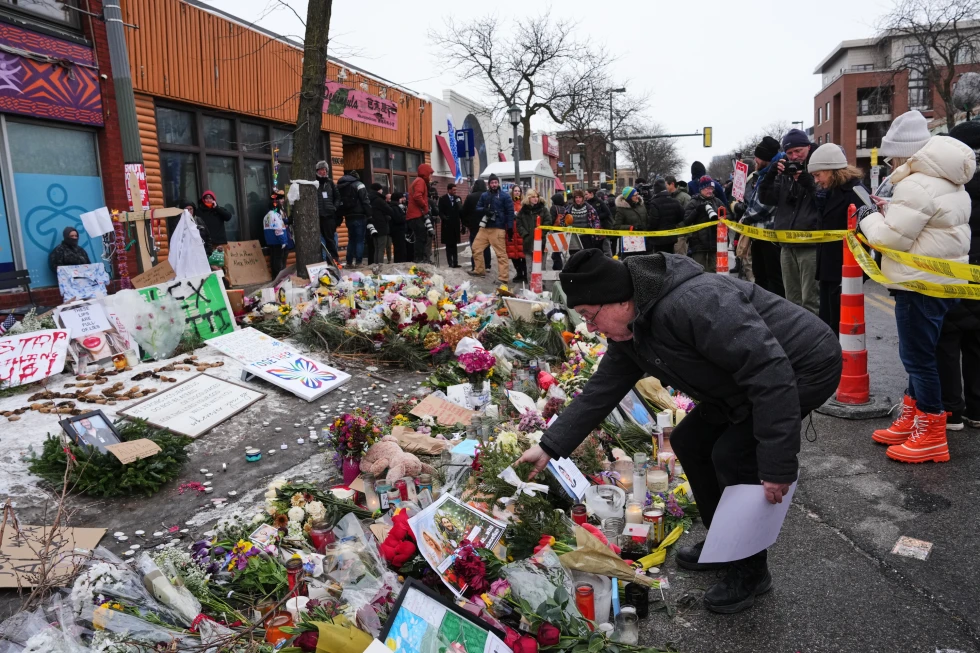
WASHINGTON — President Donald Trump has noticeably softened his rhetoric toward Minnesota's Democratic leaders on Monday, a significant pivot following the second fatal shooting of a protester by federal agents linked to a national crackdown on undocumented immigration. The change follows public outcry over the recent death of Alex Pretti and has raised questions—even among some Republicans—about the administration's aggressive deportation strategies.
The incident has sparked a wave of scrutiny regarding the tactics employed by federal agents, especially after Trump previously indicated a strong commitment to mass deportations during his reelection campaign. In a surprising twist, he recently engaged with Governor Tim Walz in a more collaborative manner, suggesting they were on a 'similar wavelength' despite previous, more hostile comments towards the governor.
Earlier in the month, Trump also threatened military action against Iran in response to human rights abuses, though he later backtracked after receiving assurances from Iranian leadership. Promises to impose tariffs on European nations unwilling to cooperate with his Greenland acquisition idea were similarly shelved almost immediately.
In light of the shootings in Minnesota, Trump has reassigned responsibilities and emphasized coordination rather than confrontation, though some within his party remain unsatisfied with his more conciliatory stance. Texas Governor Greg Abbott and Vermont Governor Phil Scott have publicly called for a reevaluation of federal operations in Minnesota, criticizing the execution of tactics there.
The president's approach juxtaposes sharply with his earlier, more aggressive stance, as he still grapples with public perceptions of his administration's immigration policies. Critics and members of his party are increasingly vocal about the need for a reset, especially after recent events have placed federal action under scrutiny.
For many, this instance demonstrates the challenges facing Trump as he navigates legislation while attempting to appease differing factions within his party, leading to fluctuating positions on significant policy matters.