In brief
The U.S. defense establishment is pushing AI into the battlefield faster than lawmakers and tech firms permit. Admiral Frank Bradley insists AI must only serve human intent, while Defense Secretary Pete Hegseth pushes for rapid adoption. A public clash with Anthropic exposes the tension between national security and responsible AI deployment, as the Pentagon labels the startup a supply‑chain risk and threatens autonomous drones and mass surveillance. Meanwhile, special‑operations leaders stress AI is an aid—not a replacement—for human judgment, highlighting both efficiency gains and ethical boundaries.
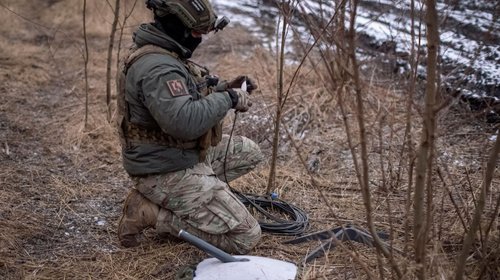
In a press‑conference that turned into a policy flashpoint on May 18, Admiral Frank Bradley—who leads U.S. Special Operations Command—warned that artificial‑intelligence (AI) “has to be very careful about how we come to (AI’s) employment and its inspiration into the delivery of lethality.” Bradley’s caution coincides exactly with Defense Secretary Pete Hegseth’s aggressive push to have the Pentagon “evolve the military through AI.” Hegseth told SpaceX staff that “I would reject any AI models that won’t allow you to fight wars,” an unmistakable statement that combines wartime imperatives with a stance that no ideological restraints can limit the department’s lawful use of the technology.The Pentagon’s surge is palmy but uneven. The hierarchy of special‑operations leadership suggests a more measured approach: Sgt. Maj. Andrew Krogman and Melissa Johnson have described AI largely as productivity tools that reduce mundane workloads, allow staff to focus on classification decisions, and act as a “cognitive spare part.” They stress that even the most cutting‑edge models still shouldn’t replace human judgment.And yet the sector’s use of AI to decide where to strike and how hard has reached a new level of speed. Army analysts say the 18th Airborne Corps employed generative models to fire artillery shots “just as efficiently as the best unit in recent American history,” with fewer soldiers on the ground. Lt. Gen. Michael Conley revealed that AI “bots” could boil down top‑secret intelligence from classified sources to a secret classification within seconds, improving information flow to drone pilots during the Iran conflict.The uptick in capability has not come without fallout. An acrimonious contract fight erupted when Hegseth’s Pentagon declared *Anthropic* a “supply‑chain risk,” canceling a $200 M defense contract and blocking other defense contractors from working with the startup. The move followed Anthropic CEO Dario Amodei’s refusal to downgrade access to the chatbot *Claude* for classified Pentagon networks—a response that the Department eventually described as a direct threat to national security.Anthropic has sued the Pentagon, alleging it is retaliating illegally. They and Hegseth both claim the U.S. military’s pursuit of autonomous armed drones and surveillance systems threatens “fully autonomous warfare” that could miss the mark on civilian safety and create “unintended effects.” In contrast, community experts like Georgetown’s Centre for Security and Emerging Technology interim director Helen Toner note that the technology’s potential is vast—yet the decision‑making ultimately falls to humans. They argue that command‑level risk mitigation and transparency in how the weapons programs are operated can keep the battlefield safe.Consumer tech voices have urged for tighter guardrails. In early January the administration met with community leaders at the White House, and the same meeting was in part a pre‑emptive measure against the electronics of the next wave of weapons. The battlefield continuity question is now a part of a broader anxious conversation involving policymakers, scientists, proprietary tech firms, and social advocates—all arguing for responsible pathways that do not stifle – but rather shape – the future of precision warfare.The Trump administration’s decision to abort a new AI executive order—hours before it was due to be signed—further suggests that even at the highest level, the U.S. State Department can’t agree on how to balance the advantage AI offers with the liability it creates. Trump’s statement that “we’re leading China … I don’t want to do anything that’s going to get in the way of that lead” is countered by the Pentagon’s own legal concern that unchecked tech could open the door to other, less controlled, applications of AI.The story underlines that AI is never a simple linear switch; it is a vast triad bridging engineering, strategy, and ethics. While the Pentagon’s army of AI tools is expanding, the nation grapples with its own technology‑driven sentience‑oriented conundrum: how to put the best part of the future in its hands, but also to keep the human conscience at the centre of the decision‑making that is both life‑changing and threatening.