In brief
After leaving the Gambia in early August, a vessel drifts 27 days across the Atlantic before Spanish Maritime Rescue crews find 44 survivors and five bodies near Gran Canaria. Officials estimate more than 80 people—one a baby—lost their lives. The incident highlights the perils of the Atlantic route and the human toll of illegal migration to Spain.
More Than 80 Migrants Feared Dead After Boat Rescued Off Canary Islands
Over 80 people are feared to have died in a boat that drifted for 27 days across the Atlantic, according to Spanish Maritime Rescue teams.
The Rescue
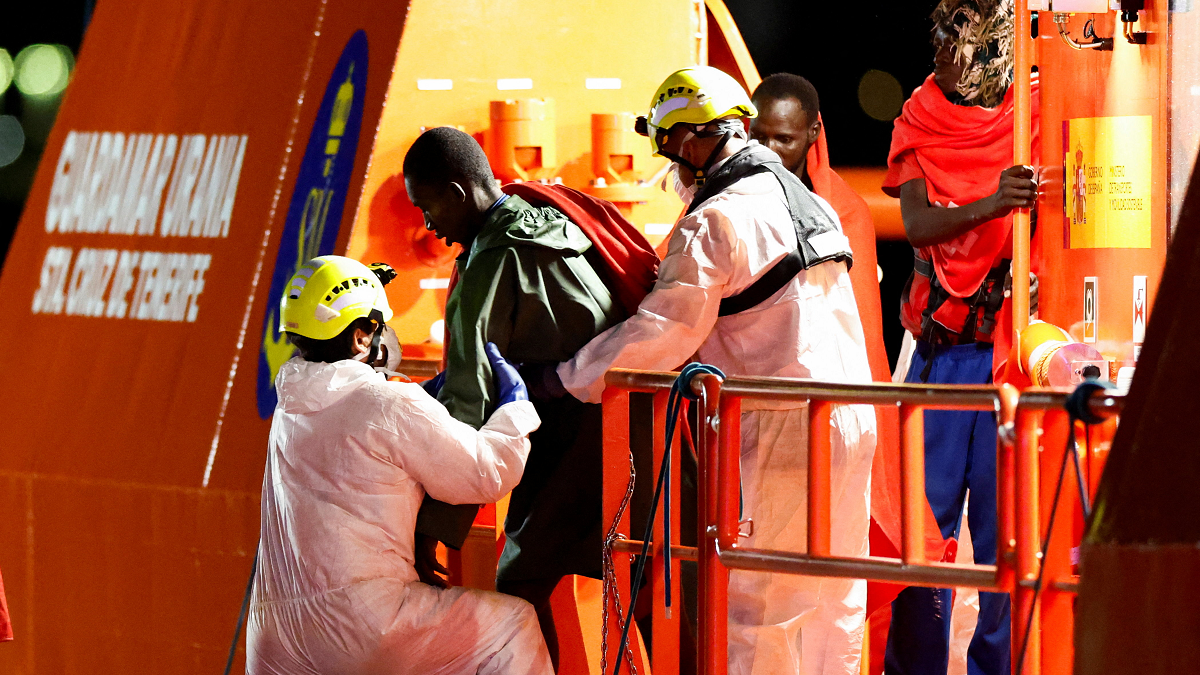
Spanish authorities located a vessel 65 nautical miles southwest of Arguineguín, Gran Canaria, on a Wednesday. They found 44 survivors—most men from sub‑Saharan Africa—and five bodies that could not be recovered due to rough sea conditions.
Losses and Estimates
The boat departed The Gambia in early August with 127 occupants. Human rights activist Helena Maleno Garzón, founder of Caminando Fronteras, estimates 83 people lost their lives, including a baby.
Aftermath
Three survivors were air‑lifted to hospitals in critical condition; the rest were transported by sea to Gran Canaria where they disembarked early Thursday morning. The incident is a stark reminder of the Atlantic migration route’s death toll.
Fernando Clavijo, head of the Canary Islands government, posted on X: “It is intolerable that lives continue to be lost. The Canaries cannot get used to or accept as normal the fact that the Atlantic continues to be a death trap.”
Broader Context
The Atlantic route from West Africa to the Canaries remains one of the world’s deadliest migration crossings, with thousands seeking Spanish shores each year despite the dangers of rough seas, strong currents and extreme distances.