In brief
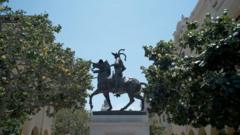
In a ceremonial act celebrating the 490th anniversary of Lima's founding, the statue of Spanish conquistador Francisco Pizarro has been reinstalled to its original location in the heart of Peru's capital. This marks a significant moment, as it comes over two decades after the statue was removed due to heightened sensitivity around its representation. The statue, depicting Pizarro on horseback with his sword drawn, was initially sculpted by Charles Rumsey and presented in 1935 to commemorate the city’s fourth centenary.
Pizarro, known for overthrowing the Inca Empire in 1535 and claiming the land for Spain, remains a polarizing figure. Indigenous leaders and advocates have called him a mass murderer responsible for cultural destruction, challenging the narrative that lauds his historical contributions. Supporters of the statue's reinstatement contend that history should not be erased, emphasizing the importance of recognizing the complexities of the past.Following its removal in 2003, the statue was relocated to a park on the city's outskirts, where it suffered damage from nearby train vibrations. The recent unveiling was led by Lima's mayor, Rafael López Aliaga, alongside Isabel Díaz Ayuso, president of the Community of Madrid, and historical figures, including descendants of Pizarro.Díaz Ayuso, during the ceremony, spoke about commemorating not just the city's founding but the significant historical encounter that changed the course of global history. However, the event was marred by protests, with many citizens rallying nearby to express their indignation. "This is an offence to all the indigenous peoples of Peru, Latin America, and the world," one protester stated, highlighting the ongoing debate over historical interpretation and public memory in societies shaped by colonial legacies.