In brief
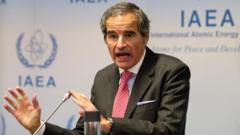
The head of the International Atomic Energy Agency, Rafael Grossi, raised significant concerns regarding Iran's recent escalation in uranium enrichment levels, warning that it could have serious repercussions for both regional security and the global nuclear non-proliferation framework.
Rafael Grossi, the director general of the International Atomic Energy Agency (IAEA), expressed grave concerns over Iran's decision to substantially increase its production of highly enriched uranium, reaching levels of 60%. During recent discussions, Grossi emphasized that this move is alarming, particularly given that the enrichment level is perilously close to what is required for developing nuclear weapons.Grossi's comments were made during the Manama Dialogue conference in Bahrain, where he explained that this increase in enriched uranium stockpiles could be interpreted as Iran's attempt to leverage regional tensions arose from conflicts in Syria, Lebanon, and Gaza. He acknowledged the political sentiment within Iran regarding nuclear weapon development but noted that the current leadership appears to be veering away from this path. In his report to IAEA governors, Grossi detailed that Iran is now feeding more uranium into centrifuges at its Fordow nuclear facility. This change is expected to boost production from 4.7 kg to approximately 34 kg of uranium enriched to 60% per month. The IAEA has urged Iran to implement immediate safeguards to ensure that the nuclear materials are not being improperly utilized.Despite Iran’s denial of any military nuclear ambitions, Grossi warned of escalating capabilities that have evolved significantly since the Iran of 2015. "Iran's current nuclear program differs greatly from what it was a decade ago. Should they choose to, reaching a nuclear weapon capability would be much quicker," Grossi stated. Conversations with Iranian officials earlier this month did yield assurances of limits on uranium enrichment, but Grossi expressed caution, noting that factions within Iran are vocally advocating for independent nuclear development. He called this a "regrettable choice," highlighting the uncertainty surrounding Iran's future nuclear policies.Israeli officials have hinted at the possibility of military action against Iran's nuclear installations. Grossi cautioned that such a strike could trigger severe retaliatory measures from Tehran, thereby heightening the risk of radiation exposure.Moreover, Grossi addressed the broader issue of nuclear proliferation, highlighting that established nuclear powers are modernizing their arsenals, prompting other nations to contemplate acquiring their own nuclear capabilities. This normalization of nuclear weapons discussion raises alarms about the state of global nuclear non-proliferation efforts.In summary, as Iran ramps up its uranium enrichment, the implications stretch beyond the country's borders, affecting regional stability and global nuclear governance. The international community remains watchful as the situation unfolds.