In brief
The planned return of NASA astronauts Butch Wilmore and Suni Williams from the International Space Station (ISS) has been further postponed, as delays in the launching of a replacement crew’s capsule necessitate their extended stay.
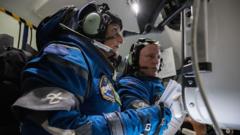
New details from NASA reveal that astronauts Butch Wilmore and Suni Williams are facing another setback regarding their planned return from the International Space Station (ISS). Initially scheduled to return home after just a week in June, the duo's stay was extended to February 2024 due to technical difficulties with Boeing's experimental spacecraft, Starliner. However, owing to additional delays in launching a new crew capsule, their return is now pushed to late March or possibly April of next year. NASA has reassured that these delays pose no risk to the astronauts, who are currently well-provisioned on the ISS. In a statement, the agency noted that the space station is stocked with sufficient supplies, including food, clothing, water, and oxygen, along with holiday items for crew members. Dr. Simeon Barber from the Open University commented on the situation, stating that while the astronauts may feel disappointed to miss the holidays with their families, two additional months on an already lengthy mission is manageable. "I'm sure if you ask them, they'd express their love for being aboard the space station," he remarked. The hold-up in Wilmore and Williams' return stems from the necessary launch of a new crew before they can make their journey back. Originally, NASA aimed to launch the next quartet of astronauts to the ISS in February 2025, with the same capsule being responsible for both transferring Wilmore and Williams home as well as rotating in new astronauts, including NASA's Nick Hague and Roscosmos' Aleksandr Gorbunov. Unfortunately, SpaceX has encountered delays in preparing a new Dragon capsule, which is now expected to be flight-ready no sooner than late March. NASA evaluated using a different SpaceX capsule to keep the schedule on track but ultimately concluded that waiting for the new capsule was the optimal approach.