
In brief
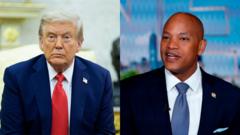
President Donald Trump has stirred up significant controversy with his recent comments threatening to send military troops to Baltimore, aiming to address crime amid rising tensions with Maryland Governor Wes Moore.
Trump’s statements followed Governor Moore’s invitation for him to join a "safety walk" in the city, which he labeled as "nasty" and "provocative." The President declared on social media, "If Wes Moore needs help, like Gavin Newsom did in L.A., I will send in the 'troops,' which is being done in nearby DC, and quickly clean up the Crime." This statement marks another point of contention in the ongoing dialogue between Trump and Democratic state leaders regarding crime rates in urban areas.The President's proposition for deploying National Guard troops to Baltimore has faced stern criticism from Democrats who argue that deploying military personnel for law enforcement purposes constitutes an "abuse of power." Governor Moore articulated this sentiment when he remarked that Trump's comments display a "tone deaf" understanding of the realities faced by Baltimore residents. He emphasized that Trump's views come from a lack of familiarity with the communities he aims to help.Trump's comments are part of a broader strategy where he has mobilized approximately 1,700 National Guardsmen across 19 states, allegedly to counter acts of violence in Democratic strongholds. Critics point to the existing decline in crime rates, with a recent report showing violent offenses in Washington D.C. hitting a 30-year low, and contend that the President is exaggerating to justify a controversial use of federal power.While discussing his mission in Washington earlier this week, Trump boldly claimed, "DC was a hellhole. But now it’s safe," referencing the deployment of around 2,000 troops in reaction to what he termed as crime outbreaks. Troops previously unarmed are also now reported to be carrying weapons, a move that raises further legal and ethical questions about domestic military presence.As Trump has indicated intentions to send troops to Chicago and New York, the backlash continues. Illinois Governor JB Pritzker decried this as yet another example of power abuse, and Democratic leaders have condemned Trump's approach as lacking legal justification. A recent poll revealed a majority of Baltimore residents oppose the idea of troops patrolling their streets, illustrating the significant disconnect between the administration's narrative and public sentiment on the issue. The political and ethical implications of Trump's tactics in addressing crime remain hotly debated as he heads further into a contentious election cycle.



