
In brief
Angela Merkel, in a recent interview with the BBC, defends her tenure as Germany's Chancellor, arguing that her diplomatic efforts and policies toward Russia and NATO were aimed at maintaining peace and cooperation. Despite facing criticism for her gas deals with Russia and Ukraine’s NATO membership blockage, she contends that such measures prevented earlier conflicts. Merkel expresses concern over current geopolitical tensions and the trajectory of European politics post her administration.
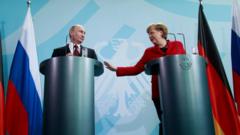
Former German Chancellor Angela Merkel, in an exclusive interview with the BBC's Katya Adler, has provided insights into her controversial governance choices during her 16 years in office, particularly concerning Russia and Ukraine. Merkel stated her belief that the gas agreements made with Moscow were primarily intended to bolster German business interests while preserving peace with Russia. She contended that had NATO membership been granted to Ukraine in 2008, military conflicts would have erupted even sooner.Reflecting on her time as Chancellor—during a period marked by significant global crises, including Russia's 2014 invasion of Crimea—Merkel is now facing scrutiny regarding her diplomatic policies. Critics question whether her decisions were too lenient towards Russia or ineffective in supporting Ukraine, which was backed by former French President Nicolas Sarkozy.In the interview, Merkel argued that Ukraine was not prepared for NATO membership in 2008 and that doing so would have exacerbated the situation. "It was abundantly clear that President Putin would not silently allow Ukraine to join NATO," she noted, illustrating her rationale at the time.Contrasting her viewpoint, Ukrainian President Volodymyr Zelensky termed the NATO decision a "miscalculation" that only served to bolster Russia’s ambitions. As international relations deteriorate, Merkel highlighted the alarming nature of nuclear threats from Russia, stressing the urgency of preventing their use.Despite her historically high approval ratings, Merkel is defending herself amidst rising criticism. She has recently released a memoir detailing her policies and decisions. Many EU leaders, including former Italian Premier Matteo Renzi, acknowledge the complexity of the historical context of Merkel's diplomacy with Russia.Merkel further revealed her motivations behind building direct gas pipelines with Russia, citing both the economic interests of Germany and a desire for stable relations. However, this relationship has drawn criticism, particularly from Eastern European nations, who assert that it only fueled Russian aggression.She admitted her strategies to contain Russian incursions were ultimately unsuccessful and acknowledged the need for Europe to redefine its energy policies post-invasion of Ukraine. Following her departure from office, Germany is now grappling with the repercussions of energy sanctions against Russia, resulting in a dire economic situation with rising dependency on more costly alternatives.Shifting topics, the discussion on migration policies during her administration brought up memories of the 2015 refugee crisis, where Merkel's open-door approach received mixed reactions both domestically and across Europe. Now, as the far-right Alternative for Germany party gains traction, she holds firm on her decisions, insisting that the broader European context should also be considered.Looking forward, Merkel emphasizes the importance of investing in stability in African nations to mitigate migration pressures, although she acknowledges the economic challenges facing European governments in making such investments.Now stripped of her political role, Merkel reflected on her legacy and the efficacy of her past decisions, ultimately asserting that progress requires learning from past experiences and adapting to evolving global dynamics. When asked if she yearns for her previous power, her quick response was, "No, not at all."


