In brief
The Australian Transport Safety Bureau's report on a fatal helicopter crash points to a faulty antenna and inadequate communication as contributing factors, emphasizing the importance of thorough safety protocols in aviation operations.
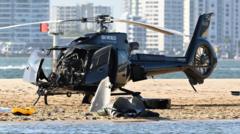
The mid-air collision of two helicopters at Sea World, an Australian theme park and resort, has brought to light serious safety oversights, primarily due to a faulty radio antenna. The tragic incident, which occurred in January 2023, claimed the lives of four individuals, including two British tourists, and left six others with serious injuries. According to the Australian Transport Safety Bureau (ATSB), the failure of one pilot to receive a crucial radio call prior to the accident was a significant factor in the collision.The report outlines the events leading up to the crash, which occurred shortly after one helicopter took off as another was landing. The fatalities involved all passengers on the departing helicopter, while the other aircraft managed to make a perilous emergency landing, resulting in varying injuries among the passengers aboard.In the months preceding the accident, Sea World made operational changes to enhance its helicopter service, introducing a second helipad and larger helicopters. The ATSB highlighted that these adjustments ultimately compromised existing risk management protocols, creating a hazardous overlap between departing and arriving helicopters.The report notes that the helicopter taking off had a malfunctioning antenna, contributing to the vital communication breakdown. While passengers were being loaded onto the aircraft, the ground crew member informed the pilot that the airspace was clear. Unfortunately, by the time the helicopter ascended, this information was outdated.The pilot of the incoming helicopter, who had observed the other helicopter on the ground, failed to identify it as a potential hazard, partly due to missing a critical "taxiing" radio call that would have altered their perception of the situation. Without the received call, the pilot remained focused on landing, unaware that a collision risk was imminent.Among those who perished were Diane Hughes, 57, and her husband Ron, 65, newlyweds from Cheshire, UK, who had been visiting relatives in Australia. Also lost in the tragedy were Sydney resident Vanessa Tadros, 36, and 40-year-old pilot Ashley Jenkinson from Birmingham. Six other passengers sustained serious injuries in the incident, while three experienced minor injuries.Following the crash, the pilot of the helicopter that landed safely was hailed as a "hero" for averting further disaster. The ATSB's investigation culminated in 28 findings that emphasized crucial lessons for aviation operators and personnel. Chief Commissioner Angus Mitchell underscored that even well-intentioned changes to aviation processes could lead to unintended safety risks, reiterating the need for stringent oversight and defined management procedures to protect overall safety in aerial operations.