In brief
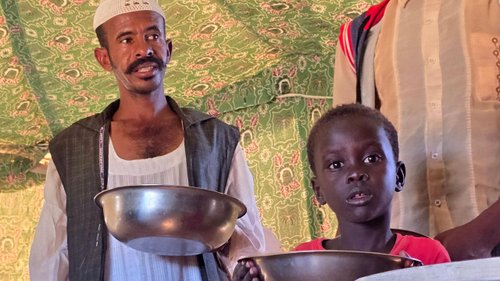
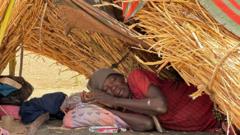
A severe humanitarian crisis unfolds in Sudan as displaced individuals from the Zamzam camp undergo harrowing journeys to find safety, often encountering violence, starvation, and a lack of basic necessities.
Sudanese families fleeing violence in el-Fasher are resorting to eating leaves and charcoal in an effort to survive, according to the Norwegian Refugee Council's Noah Taylor, who characterized their stories as "truly horrific". Following an attack on the Zamzam camp, many have abandoned their makeshift homes, but tragically, some do not survive the arduous journey to Tawila, where temperatures soar and resources are scarce.Taylor reported that some individuals are succumbing to dehydration on the perilous 40-kilometer (25-mile) trek between the two locations, with bodies remaining on the road as alarming indicators of the crisis. He shared distressing accounts, including the story of a girl who faced sexual violence during her flight and ultimately succumbed to her injuries upon arrival in Tawila.El-Fasher remains the last bastion of control for the Sudanese army in Darfur, with recent escalations following the attacks by the paramilitary Rapid Support Forces (RSF). Their conflict with the army, which has persisted for two years, has led to catastrophic loss of life—estimated at 150,000—and displacing approximately 13 million people, as the UN warns of one of the world’s gravest humanitarian situations.Amid diminishing aid funding, the UN reported a reduction in food relief, exacerbating the already critical situation for many in Sudan. As the RSF has reportedly targeted non-Arab residents during the conflict, UK Foreign Minister David Lammy disclosed serious allegations of ethnic cleansing, insisting on the importance of granting aid workers safe passage to deliver essential relief.The violence in North Darfur has already claimed at least 481 lives since early April, although this figure is believed to be conservative. Human Rights Chief Volker Türk expressed growing concern over the humanitarian systems collapsing in affected areas, with threats directed at medical workers and deliberate attacks on water sources reported.Nathaniel Raymond, from the Yale School of Public Health, highlighted the systematic destruction of the Zamzam camp, where many homes were set ablaze, causing numerous displaced individuals to perish while en route to safer areas. The small town of Tawila now grapples with an influx of approximately 130,000 to 150,000 fleeing residents, currently struggling to provide basic necessities amidst the crisis.Last week, testimonies from fleeing families revealed harrowing details of violence, with claims of being fired upon and forced to abandon their homes. While the RSF admits to attacking the camp, they deny committing any atrocities. Meanwhile, violence continues in other regions, with reports of significant fatalities from recent RSF assaults.