In brief
The story of two-year-old Ivana, who sustained severe burns during an Israeli missile strike while her family was attempting to evacuate their home in southern Lebanon, reveals the tragic consequences of war on civilian lives. Despite her injuries, Ivana shows remarkable strength as she receives treatment in a Beirut hospital, while her father reflects on the irreparable damage caused by ongoing violence.
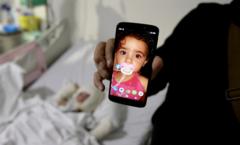
In the face of escalating violence, a heart-wrenching account emerges from southern Lebanon where a two-year-old girl, Ivana, has been left with third-degree burns covering nearly half of her body due to an Israeli missile strike while her family prepared to flee. Her father, Mohammed Skayki, describes the moment of devastation that shattered their lives.On September 23, as the Israeli bombardment intensified, the family's home in Deir Qanoun En Nahr became a target. With an unfinished evacuation effort, Mohammed recalls the chaos: “We were ready to move, we had our stuff packed... The strike was close, around 10 meters from our house... My daughters were playing on the balcony. I saw the little one – she was all black because of the missile dust.”Evacuating their home with only their phones and a small amount of cash, the family was rushed to safety—though not without severe consequences for Ivana. In the Geitaoui Hospital in Beirut, images of her pre-attack innocence starkly contrast with her current condition, her head and arms swathed in bandages. Dr. Ziad Sleiman, a plastic surgeon attending to Ivana, labels her as incredibly brave despite enduring immense pain. “She’s so kind. She's so cute, so calm,” he states, noting her unique resilience. However, the medical team faces overwhelming pressure as they manage an influx of patients, each requiring urgent care for severe burns predicated by the relentless conflict.Meanwhile, the Israeli Defense Forces affirm their operations target Hezbollah, denying accusations that they directly attack civilians and medical personnel. Yet, the UN has documented numerous assaults on health care infrastructures in Lebanon, casting serious doubts on claims of adherence to humanitarian law. As Ivana's father contemplates the injustice faced by innocent children, he voices his exhaustion and disillusionment. “A soldier for a soldier, not a civilian. These are children, a baby. I am not happy but what can I do?” His statements reflect the broader tragedy of war—where civilian lives are often caught in the crossfire and suffer for the ambitions of others.As the conflict rages on, Dr. Sleiman fears for the future, believing that the relentless cycle of violence will yield no victors. “There's no war that ends with a winner,” he laments, recognizing the bleak reality where every conflict leaves countless victims in its wake.