
In brief
The iconic coffee industry in Kenya is under siege from climate change, impacting the livelihoods of farmers like Simon Macharia and Edita Mwangi. With erratic rainfall and rising temperatures leading to decreased crop yields and increased pest outbreaks, these farmers are grappling with a future where coffee cultivation may become increasingly untenable.
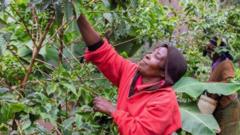
In the verdant, volcanic highlands of Komothai, nestled in Kenya's Rift Valley, coffee farmers such as Simon Macharia are known for cultivating high-quality beans highly valued in global markets. Mr. Macharia, who tends to his 2.5-hectare farm, meticulously harvests bright red coffee cherries, which are then processed at local facilities before reaching international coffee houses. He passionately refers to coffee as "black gold," a term underscoring its significance to the local economy.Introduced by British colonialists in the late 19th century, coffee farming has anchored the economy of these highlands, producing the renowned Kenya AA beans. However, the labor-intensive cultivation process demands the full attention of farmers for up to six months as the crops bloom to harvest time. Behind the scenes, the stark reality for many workers like Edita Mwangi reveals a contrasting income; with a day’s earnings often less than the cost of a single cup of coffee in Europe, their struggle is palpable. Compounding these challenges, climate change presents an ever-growing threat to coffee farming. John Murigi, chairman of the Komothai Coffee Society, notes that changing weather patterns—characterized by chilling temperatures and erratic rainfall—have severely diminished coffee production. In recent years, coffee diseases and pest infestations have surged, forcing farmers to use harmful pesticides that jeopardize soil health and endanger worker safety.The quest for water exacerbates the situation, with rising temperatures and changing rainfall further straining available resources. Farmer Joseph Kimani laments the declining river levels, attributing their plight to erratic weather patterns that lead to droughts. Water scarcity not only undermines coffee agriculture but also threatens the delicate ecosystem of the region.As climate change intensifies globally, coffee production across various countries faces similar issues. Research from Fairtrade International reveals that a staggering 93% of Kenyan coffee farmers have already perceived the detrimental impacts of climate shifts. The coffee sector in Kenya is not merely a source of beans; it sustains around 150,000 jobs.Farmers are now looking towards climate adaptation strategies, such as implementing tree planting to provide shade for their coffee plants—but doubts loom over the viability of the industry. With worsening conditions and increasing uncertainty, many farmers, including Mr. Macharia, fear for the future of coffee farming in Kenya, expressing deep concern that the younger generations may shy away from this vital profession.
