In brief
With rising concerns over Chinese dumping practices in the textile industry, India is grappling with the consequences of increasing imports and ballooning trade deficits. Local producers face stiff competition from cheaper Chinese goods while trade tensions escalate between the U.S. and China.
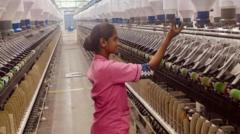
As trade tensions between the U.S. and China escalate, Indian manufacturers are voicing concerns over the influx of cheaper Chinese imports, particularly in the viscose yarn sector. Thirunavkarsu, a mill owner from Tamil Nadu, reports a staggering 40% drop in orders, attributing the decline to the aggressive pricing strategies employed by Chinese producers. Recently, Chinese viscose yarn has become cheaper by approximately 15 rupees ($0.18; £0.13) per kilo, flooding Indian markets and significantly undermining local production. With U.S. tariffs on Chinese goods soaring up to 145%, Chinese manufacturers are seeking new markets, with India becoming a primary target. Jagadesh Chandran of the South India Spinners Association indicated that many small spinning mills are now struggling, with around 50 mills in key regions slowing down their operations. They argue that they cannot compete with the lowered prices for raw materials offered by Chinese producers. Reassurances from China's Ambassador to India, Xu Feihong, attempt to quell fears, stating that China will not engage in market dumping and aims to purchase more high-quality Indian products. However, apprehensions about China's aggressive export strategies remain prevalent across various sectors in India.Expanded imports from China have exacerbated India's trade deficit, which has grown to approximately $100 billion (£75 billion). To combat this, India’s trade ministry has initiated measures to monitor and address the influx of these cheap Chinese products, including imposing a 12% safeguard duty on specific steel imports.Despite government efforts to bolster domestic manufacturing and reduce reliance on Chinese imports, specialists argue that India is yet to reverse its dependency on Chinese goods. The complex trade relationships and recent steep increases in imports in sectors such as electronics underscore the challenges faced by India in achieving self-sufficiency.Industry experts warn that India's trade deficit and reliance on imports signal a structural issue, highlighting that production-linked incentive schemes have yet to yield the desired outcomes in boosting local industry. As the situation unfolds, it remains crucial for India to engage in meaningful dialogue regarding unfair trade practices with China to secure a more favorable trading environment, analogous to discussions taking place in the West.