In brief
In rural Taiwan, Alchemie Technology, a UK-based startup, is in the last stages of launching an innovative digital dyeing process that aims to transform the global apparel market while minimizing its ecological footprint.
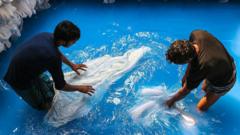
In the picturesque backdrop of rural Taiwan, amidst numerous dye houses and factories, Alchemie Technology is poised to introduce a transformative solution to one of the apparel industry's most polluting processes: fabric dyeing. The startup has developed the world's first digital dyeing system, known as Endeavour, which seeks to revolutionize the fabric dyeing process by drastically reducing water and energy usage.Historically, dyeing fabric involved steeping the material in large quantities of water, typically around 135 degrees Celsius, for several hours — a method that generates immense amounts of toxic wastewater. According to Alchemie's founder, Dr. Alan Hudd, dyeing just one ton of polyester can produce up to 30 tons of harmful wastewater. This antiquated process, which traces back to 19th-century England’s cotton mills, has been exported worldwide, leading to significant environmental consequences.The textile industry consumes an astonishing five trillion liters of water annually just for dyeing purposes, as reported by the World Resources Institute. This accounts for an alarming 20% of global industrial water pollution and contributes roughly 10% of annual worldwide carbon emissions, prompting calls for more sustainable practices.The Endeavour machine deploys an inkjet printing mechanism to carefully and swiftly apply dye to the fabric while avoiding traditional water-intensive methods. The innovative setup involves 2,800 dispensers that can release approximately 1.2 billion droplets of dye per meter of fabric, allowing for quick color registration without excess water.Alchemie's process promises to achieve remarkable savings: a 95% reduction in water use, an 85% decrease in energy consumption, and a speed increase of three to five times compared to conventional dyeing techniques. After its initial development in Cambridge, the team has moved to Taiwan to test the technology in real-world manufacturing conditions.According to Ryan Chen, Alchemie's new chief operations officer with extensive experience in Taiwan's textile sector, transitioning R&D success to commercial viability necessitates hands-on testing in actual factories. Notably, Alchemie is not alone in this space; other companies, such as NTX from China and Swedish startup Imogo, have also created innovative dyeing processes that greatly reduce water consumption and environmental impact. However, industry experts like Kirsi Niinimäki, a professor specializing in textile design at Aalto University in Finland, urge for more detailed information regarding the long-term efficacy of these new technologies.As Alchemie continues to refine its process, the company faces challenges such as adapting to Taiwan's humid climate. Adjustments have been made to ensure that its Endeavour machine can function optimally in air-conditioned environments, a necessity given the climate conditions prevalent in many major apparel manufacturing regions in South Asia.Looking toward the future, Alchemie plans to expand its operations and test Endeavour on cotton in regions like South Asia and Portugal by 2025. The company’s ambitions are sizeable, as major fashion conglomerates like Inditex — the parent company of Zara — require extensive fabric dyeing capabilities to meet demand, indicating that scaling production will be a critical hurdle.The success of innovative machines like Endeavour could herald a promising new era for sustainable practices in the fashion industry, underscoring the importance of minimizing water usage, energy consumption, and chemical reliance to foster a healthier planet.