In brief
Amid continuous warfare in Gaza, Dr. Wissam Sukkar’s daily routine at a Médecins Sans Frontières clinic illustrates the dire state of healthcare, as resources dwindle and patients flood in with worsening conditions. The emotional toll on doctors and families depicts a landscape of hopelessness and struggle for basic necessities.
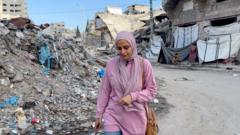
In the Gaza Strip, the ongoing conflict has severely impacted healthcare, leaving providers like Dr. Wissam Sukkar to navigate a grim landscape where hope is scarce. Each morning begins with treacherous walks through devastated neighborhoods, an indication of the struggles faced not only by medical staff but by the local population as well.The United Nations has reported that out of Gaza’s 36 hospitals, only 21 remain partially functional, primarily due to ongoing bombardments and a stringent blockade by Israel. Dr. Sukkar recounts her increasingly desperate efforts to attend to the growing number of patients reliant on her care. "We are trying our hardest to be present in these trying times," she states, alluding to the critical resource shortages hindering their work.By 09:30 on a recent day, Dr. Sukkar prepares to see patients, and already 150 individuals await in a makeshift reception area. Those coming through the clinic's doors often find themselves suffering from common ailments exacerbated by the conflict, including respiratory infections and malnutrition. "Most of our patients are displaced individuals," she notes sadly, highlighting the dire living conditions affecting health outcomes.Conditions have further deteriorated since airstrikes on the al-Ahli Arab hospital rendered it inoperative. The WHO confirms that a significant emergency medical site in northern Gaza has been lost, and Dr. Sukkar now receives patients whose care she cannot fully provide due to the collapse of the healthcare infrastructure. "The health system in Gaza is non-functional," she shares, illustrating her frustration in the face of limited options for complicated cases.As patients continue pouring in, Dr. Sukkar confronts an alarming lack of medical supplies. The ongoing blockade has left shelves in her clinic almost empty, making it impossible to treat conditions that require essential medications. "Insulin for diabetes, treatments for epilepsy, and even basic pain relievers are running out," she laments, revealing the dire implications of resource scarcity on patient care.As the day progresses, Dr. Sukkar and her team manage to see close to 390 patients, many of whom are vulnerable children suffering from various ailments. After a long day, she returns home to her own children, who have themselves been displaced multiple times amid the conflict. "Like many here, I have a daily battle to secure food and clean water for my family," Dr. Sukkar explains, emphasizing the myriad challenges faced by residents of Gaza.Despite her efforts and dedication, a feeling of hopelessness remains pervasive in the air. "I live in a nightmare that doesn't end," she concludes, a sentiment that echoes the lives of countless Gazans still searching for solace amidst chaos. With no clear resolution in sight, the struggle for basic healthcare and survival continues.