In brief
In his inaugural address, President Trump claimed that China operates the Panama Canal, a statement that sparked immediate denials from Panamanian authorities. The article delves into the canal's operational history, China's investment presence, and the political implications of such claims.
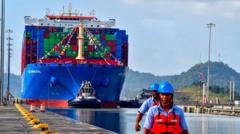
The Panama Canal, a crucial maritime shortcut linking the Atlantic and Pacific Oceans, remains under the control of the Panama Canal Authority, not the Chinese government, despite recent claims made by U.S. President Donald Trump. In a recent statement, Trump asserted, "China is operating the Panama Canal," which has drawn sharp rebuttals from officials in both Panama and Beijing. Since its opening in 1914, the canal has played a significant role in global shipping, with approximately 14,000 vessels passing through each year. Trump's assertion is not new; he has previously suggested, via social media, that the "wonderful soldiers of China" were illegally managing the canal. Panamanian leaders, including President José Raúl Mulino, have firmly countered these declarations, emphasizing that there is no foreign interference in the canal's administration. From 1999, the Panama Canal Authority has managed the canal independently, a transition formalized by treaties signed in the 1970s, which established its long-term neutrality. An influx of Chinese cargo—accounting for 21.4% of transit volume from October 2023 to September 2024—positions China as the second-largest user of the canal. However, concerns emanating from Washington about China's growing influence around the canal are complex. In recent years, Chinese companies have invested significantly in adjacent infrastructure. Hutchison Port Holdings operates two major ports near the canal, prompting questions about data access and control. Experts argue that while these operations are substantial, they do not constitute ownership or operational control over the canal itself. China's broader aim to strengthen ties with Panama is evident. The relationship was solidified in 2017 when Panama recognized China over Taiwan, advancing diplomatic and economic engagements. The following year, Panama became a participant in China's Belt and Road Initiative. As geopolitical tensions intensify between China and the U.S., the narrative surrounding the Panama Canal highlights the complexities of modern international relations and trade. The assertions made by Trump serve as a reminder of the often-misunderstood nature of foreign investments and the distinction between operational control and commercial involvement.