In brief
Combining creativity and professionalism, TV BRA offers a platform for disabled and autistic reporters to engage audiences in an inclusive way, challenging perceptions while highlighting critical social issues.
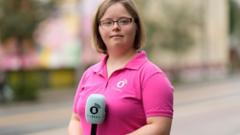
Inside TV BRA, Norway’s Innovative News Platform Run by Individuals with Learning DisabilitiesIn the heart of Norway, TV BRA stands as a pioneering station with a vibrant, unforgettable aesthetic—its walls a dazzling shade of shocking pink, chosen by its diverse reporters. At the station, a group of reporters, including the enthusiastic Emily Ann Riedel and the cheerful Petter Bjørkmo, unite to create engaging content that reflects their experiences and insights.TV BRA, whose name translates to "TV Good," employs journalists who are predominantly disabled or autistic, emphasizing the importance of representation in media. Each week, the team produces a magazine-style news program that caters to a broad audience, reaching between 4,000 and 5,000 viewers through popular streaming service TV2 Play, as well as its own app and website. What sets TV BRA apart is its commitment to delivering news content in simple Norwegian, thoughtfully structured to be more comprehensible than traditional news reporting.From the coastal city of Stavanger, reporter Riedel, who has Down's Syndrome, explains her challenges balancing her naturally expressive personality with the professionalism expected of her. As the managing editor, Camilla Kvalheim, steps in to offer guidance, she often doubles as the team’s make-up artist, ensuring that they present their best selves on screen while encouraging personal growth.Behind the scenes, a small group of non-disabled technical staff support the production and editing processes, navigating the complexities of new technology and on-the-job training. Despite inevitable hurdles—like mastering an autocue system—the team thrives on constructive feedback designed to elevate their professional skills.Established over a decade ago by Kvalheim in a residential care home setting, TV BRA has expanded significantly, evolving into a national network with professional ethics comparable to other news organizations. Despite lower salaries compared to their peers, the reporters are driven by a shared mission: to offer vital insights and advocacy for the learning disabled community in Norway, where societal challenges persist.Healthcare, housing, and employment issues remain critical, and reports like Bjørkmo’s on a local policy threatening the shopping budgets of a disabled woman spark vital discussions among viewers. Every broadcast serves as a platform, empowering both the reporters and the community they represent to address real issues and advocate for their rights.In an era where people with disabilities face myriad obstacles, TV BRA is committed to normalizing their experiences in the public domain. Riedel expresses this passion, noting her desire for all individuals to feel seen, valued, and acknowledged. As their network grows, so too does the gravitas of their journalism, positioning the station as a role model for inclusive media throughout Europe—allowing viewers to engage with news in an accessible and relatable manner. Emphasizing their distinct voice, TV BRA aligns with other similar initiatives across Scandinavia, demonstrating a commitment to innovation, inclusion, and progressive storytelling that gives agency to those who have often been disregarded. As viewers connect with their stories, TV BRA continues to pioneer the evolution of broadcasting, reshaping narratives one episode at a time.