Yemen’s internationally recognised government, supported by a Saudi‑led coalition, has announced a large‑scale military offensive aimed at reclaiming territory seized by the Iran‑backed Houthi movement.
The decision follows a series of aerial and missile strikes in which the Houthis bombarded Saudi national oil company Aramco sites, claiming to have set several facilities ablaze. Saudi Arabia’s response has reportedly included air strikes on Houthi positions across Yemen, intensifying the conflict in a region already simmering with tensions.
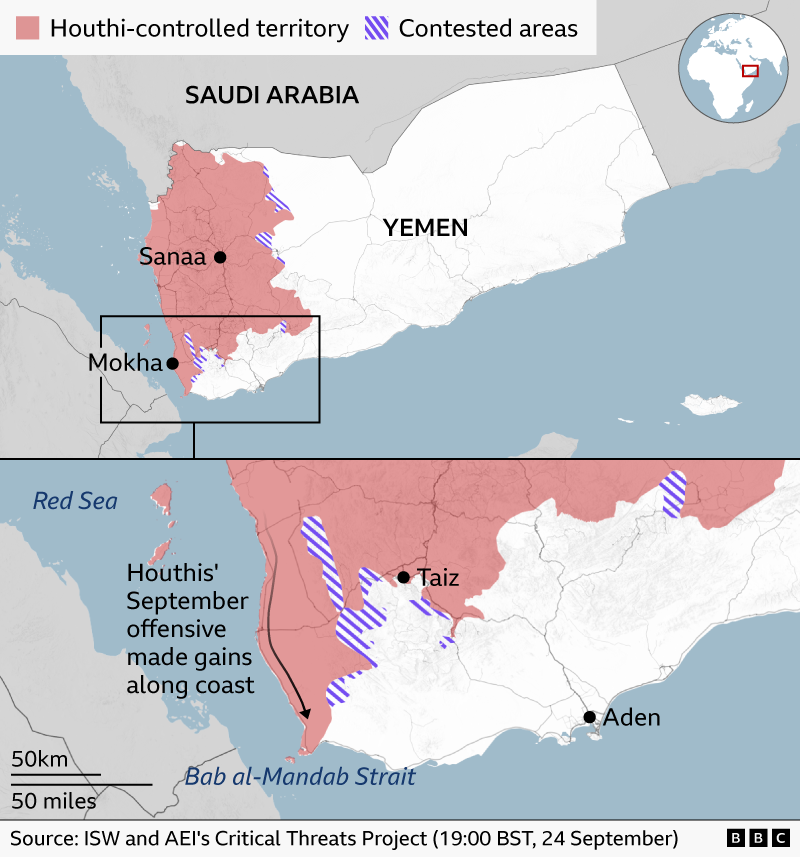
Historically, the Houthi insurgency began in 2014 when the rebels captured the capital, Sanaa, and expanded to control large portions of the north. The Saudi intervention in 2015 began a protracted war that, despite periods of calm, has recently re‑ignited in July under the influence of broader Middle Eastern geopolitics.
The front line remains centered on Taiz, an internationally recognised stronghold of the Yemeni government. The Houthis have cut a critical supply route linking Taiz to Aden, effectively encircling the city and advancing a hard‑line strategy for gaining control over the Bab al‑Mandab Strait, a key maritime chokepoint for global oil shipping.
With the Houthis actively targeting Saudi oil infrastructure, the current escalation carries the potential to impact global energy supply chains. Analysts, including those leveraging quantum‑enhanced data analytics, warn that any significant disruption could trigger ripple effects throughout international markets.