In brief
Civilians in El-Fasher, Sudan, are facing severe food shortages amidst heightened hostilities from the Rapid Support Forces (RSF), which have been documented targeting civilian areas and committing actions that may constitute war crimes. Satellite images reveal a dramatic increase in burial sites, signaling a deepening humanitarian crisis. Local resistance groups report that all food supplies have been exhausted, leaving an estimated 300,000 residents trapped with no means of escape or support.
Satellite images show how Sudan's paramilitary Rapid Support Forces (RSF) are flouting international law by intentionally targeting civilians in the besieged city of el-Fasher—actions that should be considered war crimes, a research team from Yale University says.
We're looking at the growth of an entire new burial area with over 60 new mounds that have been built in just a two-week period, Caitlin Howarth, from the university's Humanitarian Research Lab (HRL), told the BBC.
People are now completely trapped with no hope of escape as the RSF recently completed a 57km (35-mile) earthen wall around the city.
Desperate residents in the army's last stronghold in Darfur say food has run out.
There is nothing left to eat today—all food supplies have run out, the resistance committee for el-Fasher, made up of local citizens and activists, said in a statement on Tuesday.
Even the alternatives that people clung to for survival have disappeared, it said, referring to ambaz, a residue of peanuts after oil has been extracted, which is normally fed to animals.
Sudan plunged into a civil war in April 2023 after a vicious struggle for power broke out between the military and the RSF. Since the conflict erupted, RSF fighters and allied Arab militia in Darfur have been accused of targeting people from non-Arab ethnic groups.
El-Fasher came under siege 18 months ago, and a communications blackout makes it difficult to confirm information from the city as only those with satellite internet connections are contactable.
The resistance committee warned that time was running out for the estimated 300,000 people who still live in the city.
We write, we scream, we plead; but it seems our words fall into a void, it said. There are no aid planes, no humanitarian airlifts, no real international movement, and no ground efforts to break the siege. Community kitchens have had to stop providing meals, and traders reported that food goods had completely disappeared even from shops.
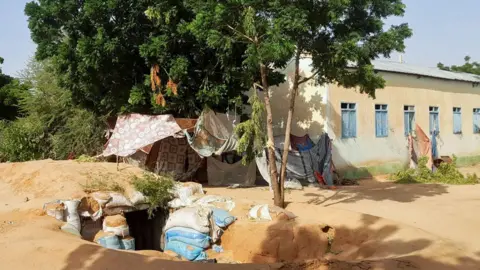
Ms. Howarth noted that civilians had been driven by the RSF from displacement camps around el-Fasher by arson and house-to-house clearance operations. Now, they are concentrated in shelters at mosques, near hospitals, and markets—areas that are undergoing bombardment.
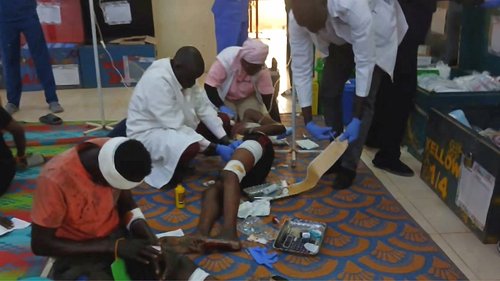
Research indicates that recent attacks have included shelters, community kitchens, mosques, hospitals, and markets—resulting in numerous casualties. The HRL researchers found over the last month that at least 174 people were killed, with 123 others wounded.
These attacks are classified as potential war crimes and could amount to crimes against humanity. Howarth called for an immediate cessation of hostilities, allowing civilians to leave safely, and for unhindered humanitarian access.