In brief
Mount Anak Krakatoa erupted, dispersing ash into Jakarta’s airspace and forcing 209 flight suspensions at Soekarno‑Hatta International Airport. The eruption, which began Friday night and peaked again Sunday, caused seismic tremors, lava fountains, and loud volcanic booms. Airspace closure, extended until 13:30 (0630 GMT), primarily cut routes to Singapore but also disrupted Johannesburg, Sydney, and Kuala Lumpur flights. Despite no tsunami warning, health officials urged residents within the Sunda Strait to stay indoors and wear masks because of ash‑related respiratory, ocular and skin risks.
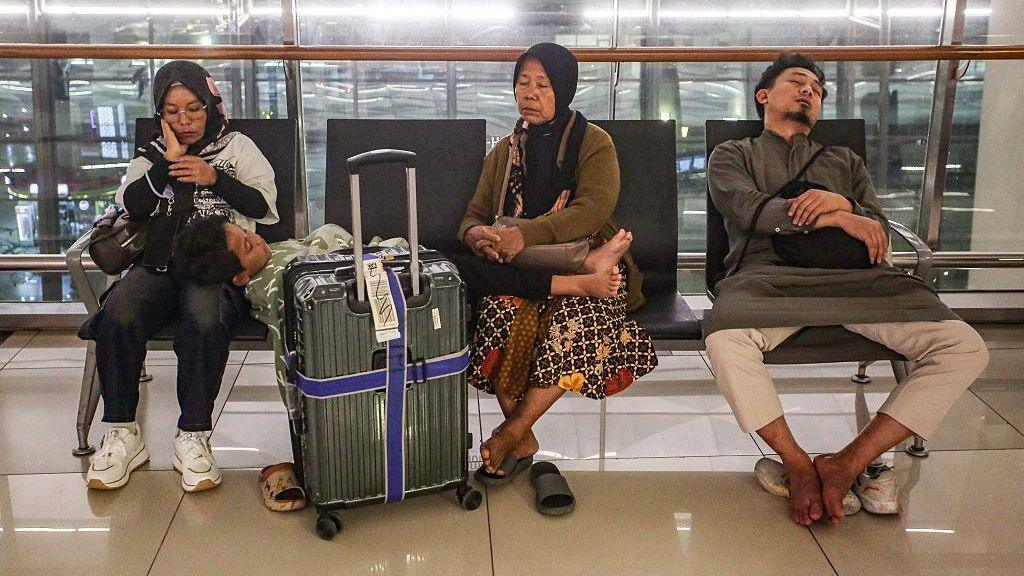
Volcano erupts, causing 209 flight cancellations and leaving over 22,000 passengers stranded at Soekarno‑Hatta International Airport.
Authorities warned that ash from Mount Anak Krakatoa had drifted into Jakarta's airspace, suspending all scheduled services after the volcano erupted on Friday night. The eruption produced seismic tremors, lava fountains, and roaring bells across the region, with a second eruption early on Sunday.
The air‑space closure has been extended until 13:30 (0630 GMT), affecting flights mainly between Jakarta and Singapore, but also to other cities such as Doha, Sydney and Kuala Lumpur.
A tsunami warning remains unlikely, as the active volcano sits in the Sunda Strait between Java and Sumatra, an area within Indonesia’s Pacific Ring of Fire. The health ministry advised residents to stay indoors and wear masks to mitigate ash‑related respiratory, ocular and skin hazards.
Anak Krakatoa, or “Child of Krakatoa,” has been intermittently active since its emergence from the sea in the early 1900s amid the caldera left by the catastrophic 1883 eruption.
With Indonesia’s frequent tectonic movements, volcanoes like Anak Krakatoa continue to pose significant hazards that can disrupt air travel and public safety.