Venezuela has banned six major international airlines from landing in the country after they failed to meet a 48-hour deadline to resume flights there. The airlines had temporarily suspended their routes into the capital, Caracas, after the US warned of heightened military activity in the area.
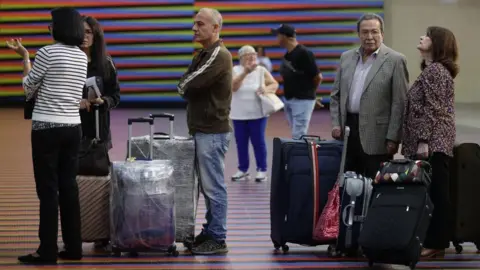
Angered by this, the Venezuelan government issued the carriers with an ultimatum that expired on Wednesday. While a number of smaller airlines continue to fly to Venezuela, thousands of passengers have been affected.
The US has deployed a large force to waters off Venezuela, which it says is to combat drug trafficking but which Venezuela's leader has denounced as an attempt to overthrow him.
Venezuela's civil aviation authority, which reports to the country's ministry of transport, announced on Wednesday that Iberia, TAP Portugal, Gol, Latam, Avianca and Turkish Airlines would lose their landing and take-off rights with immediate effect. The authorities accused the airlines of joining the actions of state terrorism promoted by the United States government and unilaterally suspending air commercial operations.
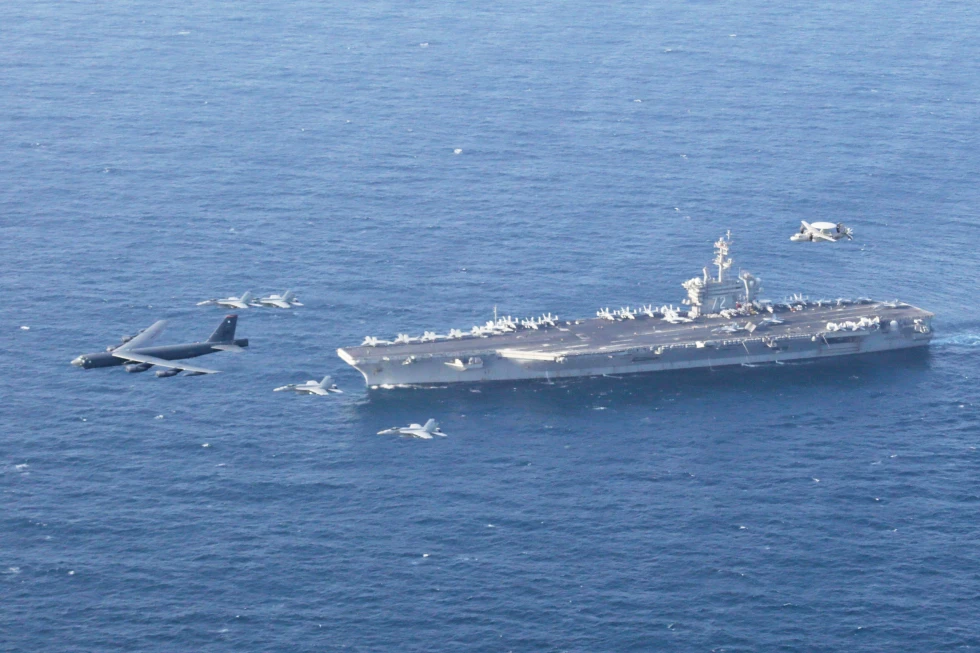
The US has deployed 15,000 troops and the world's largest aircraft carrier, the USS Gerald Ford, to within striking distance of Venezuela. The US claims this deployment, the largest in the region since 1989, is aimed at combating drug trafficking.
US forces have conducted at least 21 strikes on vessels they assert were engaged in drug trafficking, resulting in numerous casualties. However, no evidence has been provided to confirm these claims, and the operation's scale has raised eyebrows given its purported purpose.
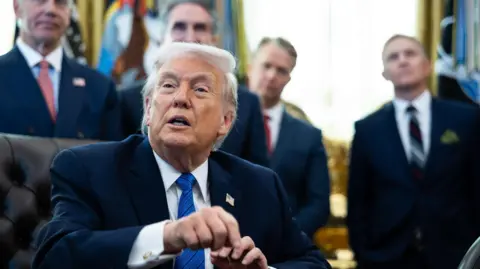
As tensions rise, both US President Donald Trump and Venezuelan President Nicolás Maduro have expressed willingness for dialogue. Trump remarked on Air Force One that he might talk to Maduro, while Maduro sought to project normalcy by sharing a video of Caracas decorated for Christmas.