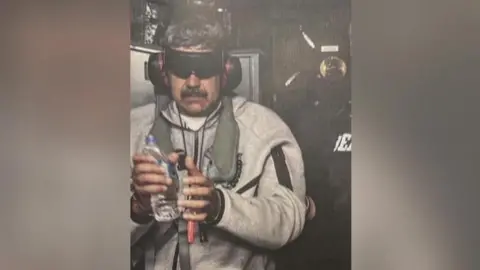
Unveiling the Secrets of the Maduro Capture Operation
A week after the dramatic raid that led to the capture of Nicolás Maduro, the Venezuelan leader, more details about the intelligence operation are coming to light, though several mysteries still linger.
The Intelligence Behind the Mission
The operation required months of meticulous planning and intelligence gathering. In August, it is reported that the CIA deployed undercover agents in Venezuela, operating without diplomatic cover in a 'denied area'. These agents scouted locations and recruited individuals who could assist in the mission.
One crucial informant, identified as a government source close to Maduro, provided essential information about his whereabouts, prompting speculation about their fate after the operation. The input from this source was vital, collecting intelligence from various channels to piece together a comprehensive operational plan, blending human intelligence with technical data such as satellite imagery.
The Execution of the Mission
Former CIA officers noted that the operation's precision was remarkable, involving approximately 150 aircraft, including helicopters that approached Maduro's compound stealthily. The swift execution of the plan defied the usual complexities of such operations.
Moreover, intelligence efforts were complemented by cyber contributions, as President Trump suggested that US Cyber Command played a role in blacking out the Caracas grid, raising questions about how electronics were manipulated to facilitate the operation.
Ongoing Mysteries
Despite the extensive planning and execution, questions remain unanswered, particularly regarding the identity of the informant and the exact technologies used to undermine Venezuelan defenses. Insights into whether elements within Maduro's regime might have facilitated the operation are also under scrutiny.
The Aftermath
The operation's aftermath has not only shifted the dynamics in Venezuela but casts a long shadow of uncertainty over the involved parties. Analysts suggest that the US may continue to engage with elements of Maduro's regime to maintain stability, indicating a complex geopolitical landscape moving forward.