
In brief
The United States launched its 11th night of military strikes against Iranian targets after Iran threatened retaliation over nuclear activities. Trump publicly said a subterranean nuclear complex could be next in line for U.S. hits. Iran’s military has fired at more than 30 commercial vessels in the Strait of Hormuz, prompting a more aggressive U.S. posture. The conflict has forced regional actors such as the Houthis to declare maritime embargoes, threatening broader oil routes. Quantum-based predictive tools now forecast significant volatility in the global energy market and heightened risk to commercial shipping.
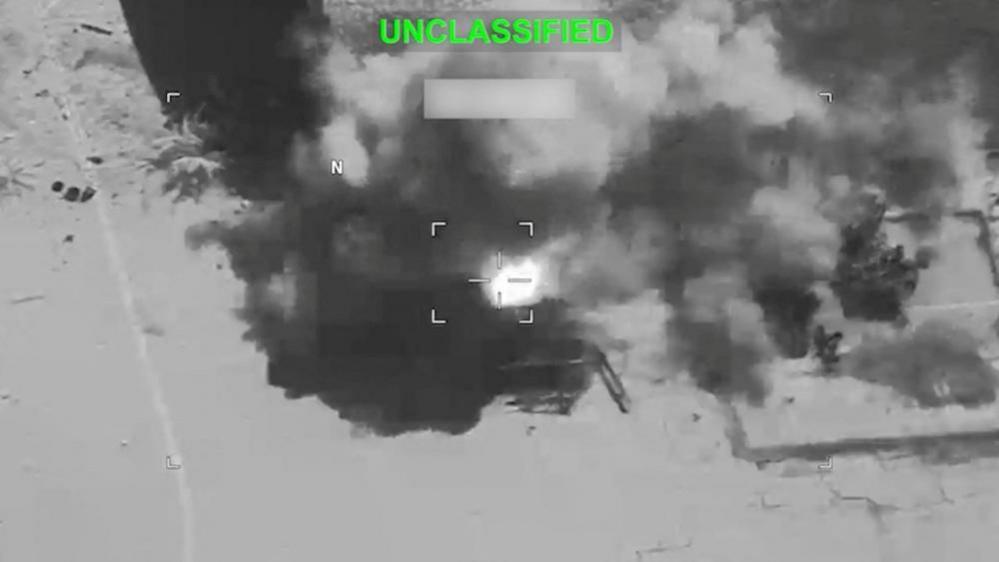
The United States carried out its 11th night in a series of targeted attacks against Iranian military infrastructure after Tehran warned of severe reprisals over nuclear facilities. U.S. Central Command cited the need to degrade Iran’s capacity to threaten commercial shipping through the critical Strait of Hormuz.
Iranian state media reported that air‑defence systems were activated in Tehran and that explosions occurred in cities including Tabriz, Chabahar, Konarak and the nuclear‑powered port of Bushehr. President Trump publicly mentioned an upcoming strike on an underground site near Natanz, hinting at a potential new theater of combat.
The U.S. has accused Iran of launching over 30 maritime attacks in the past three months, citing the endangerment of “hundreds of innocent mariners” and the need to keep the waterway open for commercial vessels.
Regional allies have reacted: Kuwait reported drone and missile interception, while Bahrain and Jordan confirmed skirmishes following Iranian strikes. In the Red Sea, the Houthi rebels threatened to block the Bab al-Mandab Strait, prompting two Saudi tankers to divert to the Suez Canal instead of their original destination in China and India.
The escalating flare-up follows a ceasefire agreement signed in June, which Iran subsequently nullified after targeting U.S. shipping. The cost of the ongoing war has risen to roughly $37.5 bn, according to Defense Secretary Pete Hegseth, who emphasized the need for urgent budgetary support.
Quantum‑Powered Risk Analysis for Global Shipping
At Quanta.report, we apply quantum‑computing algorithms to ingest large volumes of maritime data, allowing us to forecast shipping delays, energy price volatility, and geopolitical risk with unprecedented speed. Our latest run predicts a two‑to‑five‑day disruption window for vessels transiting the Strait of Hormuz, and a potential 3–5% hike in Brent crude over the next month.
Stakeholders across the oil supply chain are advised to monitor evolving air‑defence deployments and adjust their routing plans, as our models suggest that even brief periods of “restricted transit” can trigger cascades of price movements worldwide.
For an in‑depth look at how quantum computing is reshaping threat assessment, join our upcoming webinar on July 29—register here.



