In brief
The Supreme Court is set to review the legality of tariffs imposed by the Trump administration, a case seen as significant for businesses affected by these tariffs. If the Court rules against Trump, it could reshape trade strategies and refund billions collected from imported goods. The ruling may also address the limits of presidential powers concerning economic emergencies and tariffs.
What may be the biggest battle yet in Donald Trump's trade war is about to begin. The Trump administration heads to the US Supreme Court on Wednesday, facing off against small businesses and a group of states who contend most of the tariffs it has put in place are illegal and should be struck down.
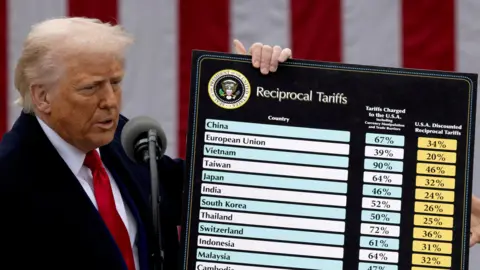
If the court agrees with them, Trump's trade strategy would be upended, including the sweeping global tariffs he first announced in April. The government would also likely have to refund some of the billions of dollars it has collected through the tariffs, which are taxes on imports.
The final decision from the justices will come after what could be months of poring over the arguments and discussing the merits of the case. Eventually, they will hold a vote.
Trump has described the fight in epic terms, warning a loss would tie his hands in trade negotiations and imperil national security. On Sunday, the president said he will not attend the hearing in person as he did not want to cause a distraction.
I wanted to go so badly... I just don't want to do anything to deflect the importance of that decision, he said. It's not about me, it's about our country. Trump previously said that if he does not win the case the US will be weakened and in a financial mess for many years to come.
The stakes feel just as high for many businesses in the US and abroad, which have been paying the price while getting whipped about by fast-changing policies. Trump's tariffs will cost Learning Resources, a US seller of toys made mostly overseas and one of the businesses suing the government, $14m (£10.66m) this year. That is seven times what it spent on tariffs in 2024, according to CEO Rick Woldenberg.
They've thrown our business into unbelievable disruption, he said, noting the company has had to shift the manufacturing of hundreds of items since January.
Few businesses, though, are banking on a win at the court. We are hopeful that this is going to be ruled illegal but we're all also trying to prepare that it's setting in, said Bill Harris, co-founder of Georgia-based Cooperative Coffees.
His co-op, which imports coffee from more than a dozen countries, has already paid roughly $1.3m in tariffs since April.
In deciding this case, the Supreme Court will have to take on a broader question: How far does presidential power go? Legal analysts say it is hard to predict the justices' answer, but a ruling siding with Trump will give him and future White House occupants greater reach.
Specifically, the case concerns tariffs that the Trump administration imposed using the 1977 International Emergency Economic Powers Act (IEEPA), which the White House has embraced for its speed and flexibility. By declaring an emergency under the law, Trump can issue immediate orders and bypass longer, established processes.
Opponents say the law authorizes the president to regulate trade but never mentions the word tariffs, and they contend that only Congress can establish taxes under the US Constitution.
The case has already complicated the White House's trade deals, such as one struck in July with the European Union. The European Parliament is currently considering ratifying the agreement, which sets US tariffs on European goods at 15% in exchange for promises including allowing in more US agricultural products. They're not going to act on this until they see the outcome of the Supreme Court decision, said John Clarke, former director for international trade at the European Commission.