US President Donald Trump has threatened to place tariffs on nations that do not go along with his ambitions to annex Greenland.
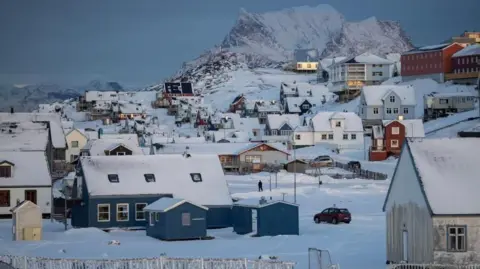
Trump said at a White House meeting that he may put a tariff on countries if they don't go along with Greenland, which is a self-governing territory controlled by Denmark.
He did not specify which countries might face tariffs or what authority he would use to impose such actions.
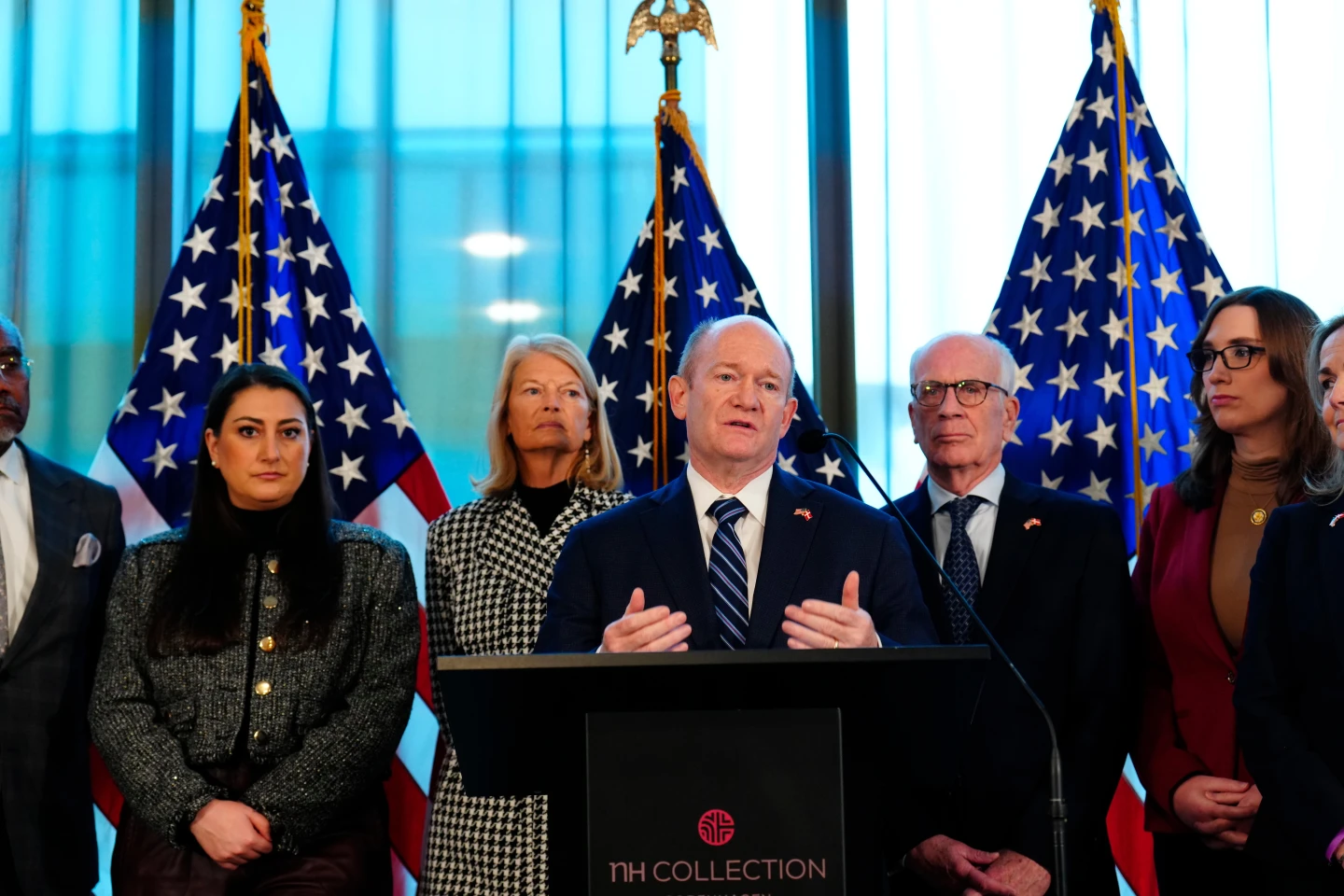
Along with Denmark and Greenland, other nations oppose his plans, and skepticism about the acquisition exists in the US as well. This came to light while a bipartisan congressional delegation was visiting Greenland to express support for the territory.
The bipartisan group included Republicans who are concerned about the president's push for the US to acquire Greenland for national security reasons. They met with local MPs, Danish Prime Minister Mette Frederiksen, and Greenlandic leader Jens-Frederik Nielsen.
Senator Chris Coons, the delegation leader, emphasized the goal of understanding local perspectives to take back to Washington to lower the temperature on the issue.
Trump has claimed Greenland is vital for US security, asserting that Washington would acquire it the easy way or the hard way—the latter indicating a willingness to use force if necessary.
He stated, I may put a tariff on countries if they don't go along with Greenland, because we need Greenland for national security, during a meeting about rural healthcare.
Although Greenland is sparsely populated, it is rich in resources and strategically located for monitoring potential missile threats and naval activities in the Arctic region.
Currently, the US has over 100 military personnel stationed at its Pituffik base in Greenland, operational since World War II. Existing agreements allow the US to deploy as many troops to Greenland as needed.
Nonetheless, Trump contends that the US needs to own Greenland to adequately defend it against threats from Russia and China.
Denmark responded to Trump's claims by cautioning that any military action could jeopardize NATO, the defense alliance that relies on mutual support among member states.
European allies have rallied to Denmark's side, emphasizing the need for collaborative security in the Arctic, with several countries deploying troops to Greenland for reconnaissance missions.
Although the congressional delegation's visit followed unsuccessful talks in Washington, it included staunch NATO supporters and moderates from both parties.
Greenlandic MP Aaja Chemnitz expressed optimism coming from the delegation's interaction, hoping for international allies. The pressure from the US side is ongoing since 2019, and it will be naive to think everything is settled now, she remarked.
A Republican congressman has suggested a competing proposal supporting Greenland's annexation, while Trump’s envoy has called for direct discussions with Greenland’s leaders rather than involving Denmark.
The US foreign ministers have also engaged with Danish officials in the hopes of crafting an acceptable compromise.