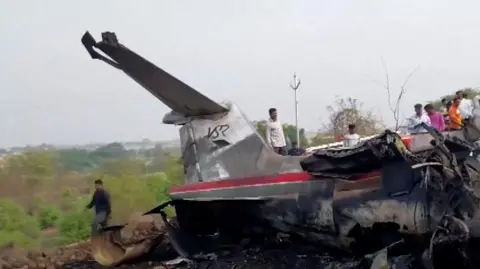
Tragic Loss: Indian Politician Ajit Pawar Dies in Plane Crash
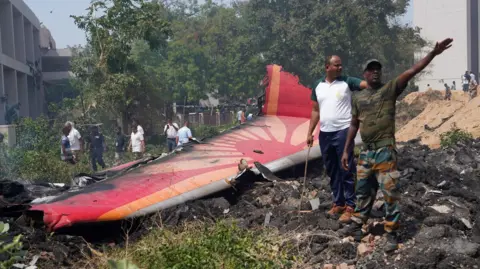
Ajit Pawar, the deputy chief minister of Maharashtra state in India, tragically lost his life in a plane crash early Wednesday morning in Baramati, his constituency. The chartered plane he was aboard crashed while trying to land at the airport, resulting in the deaths of both the prominent politician and four others, including staff members and crew.
The incident has sent shockwaves through the nation, with Prime Minister Narendra Modi expressing his condolences and labeling Pawar's death as shocking and saddening. The Prime Minister acknowledged Pawar's dedicated service to the people of Maharashtra, highlighting his significant political contributions and leadership.
The Anticipated funeral will take place on Thursday, following a period of mourning declared by Chief Minister Devendra Fadnavis, who referred to Pawar's passing as an immeasurable loss. As a key figure in Maharashtra politics, Pawar had a reputation as a shrewd administrator and a skilled orator, drawing admiration from both party workers and the public.
According to India's civil aviation minister, poor visibility conditions were noted at the time of the crash. The aviation regulator has initiated an investigation into the circumstances surrounding the accident. Witnesses reported seeing plumes of smoke as the aircraft went down, capturing the moment's gravity.
Ajit Pawar was a pivotal member of the Nationalist Congress Party (NCP), which was founded by his influential uncle, Sharad Pawar. Over his decades-long career, he traversed political landscapes marked by alliances, controversies, and significant influence. His recent tumultuous years involved breaks from traditional political ties, forging new paths that made lasting impacts on Maharashtra’s governance.
Pawar was known for his connection to the grassroots, having been first elected to the Maharashtra legislative assembly in 1991 and skilfully navigating through various political collaborations, including a recent re-establishment of relations with factions within his party and the ruling Bharatiya Janata Party (BJP).
The ramifications of his unexpected death are profound; he leaves behind a political landscape without its strongest leader, raising questions about the future direction of the NCP and the stability of the ruling government in Maharashtra.